

When you think about leadership and teenagers, what comes to mind? For most people, it's the classic roles: team captain, class president, maybe the head of the debate club. But that’s an old-school view. True leadership today is about a core set of real-world skills that help teens navigate everything—from school and friendships to their future careers.
We’re talking about things like initiative, resilience, and collaboration. When we help teens build these abilities early, it’s a total game-changer for their confidence and sets them up to handle whatever life throws their way.
Why Teen Leadership Is an Essential Life Skill

Let's get one thing straight: leadership isn't about having a formal title. It's about having a practical toolkit for personal growth. It’s learning how to take ownership of your actions, communicate what you mean, and work well with others. These skills aren't just "nice to have"—they're directly linked to better grades and stronger mental well-being.
When a teen steps up to lead—even in small ways—they're learning to navigate complex social situations and solve problems on their own. This process builds a powerful sense of self-efficacy, which is just a fancy way of saying they believe they can handle things. In a world full of academic and social pressure, that belief is a powerful antidote to anxiety.
And this isn't just a theory. Young people are already taking charge all over the globe. Look at the World Economic Forum's Global Shapers network, where leaders under 30 are tackling massive issues like climate change and economic inequality. They prove that leadership starts now, not someday in the future.
Connecting Leadership to Motivation and Mental Health
One of the biggest hurdles I see teens face is a constant battle with motivation and procrastination. Schoolwork can feel totally disconnected from their actual interests, which kicks off a nasty cycle of avoidance and stress. This is exactly where leadership skills can make a real difference.
When teens learn to set small, achievable goals, manage their time, and take the lead on projects they genuinely care about, they find a new sense of purpose. It sparks an intrinsic motivation that helps them push through the procrastination.
A huge part of this is also tied to mental health. The ability to advocate for yourself, manage stress, and build a supportive crew of friends are all leadership skills. Recognizing that connection is vital. Equipping teens with resources from places like The Jed Foundation or NAMI empowers them to lead from a place of emotional strength.
Leadership is ultimately about influence and impact, not a position. When teens learn to organize study groups, mediate disagreements between friends, or volunteer for a cause they believe in, they are practicing essential leadership skills every day.
When we look at leadership through this wider lens, it becomes something every teenager can develop. It’s not for a select few; it’s a powerful tool for everyone.
If you’re looking for more strategies, you might find our detailed guide on leadership for teenagers helpful. This approach helps them build a foundation for success that goes way beyond the classroom.
Building the Foundational Skills of a Leader
Leadership isn't some abstract quality you're born with. It's a set of practical, real-world skills that anyone can build, brick by brick. For teens, the training ground is everyday life—speaking up in a group project, taking charge of a chore without being asked, or just listening when a friend needs to talk.
These moments are where the real work happens. They're the building blocks for the confidence you'll carry for the rest of your life.
This image shows exactly how you can start building those key skills, not by sitting back and watching, but by jumping in and getting involved.
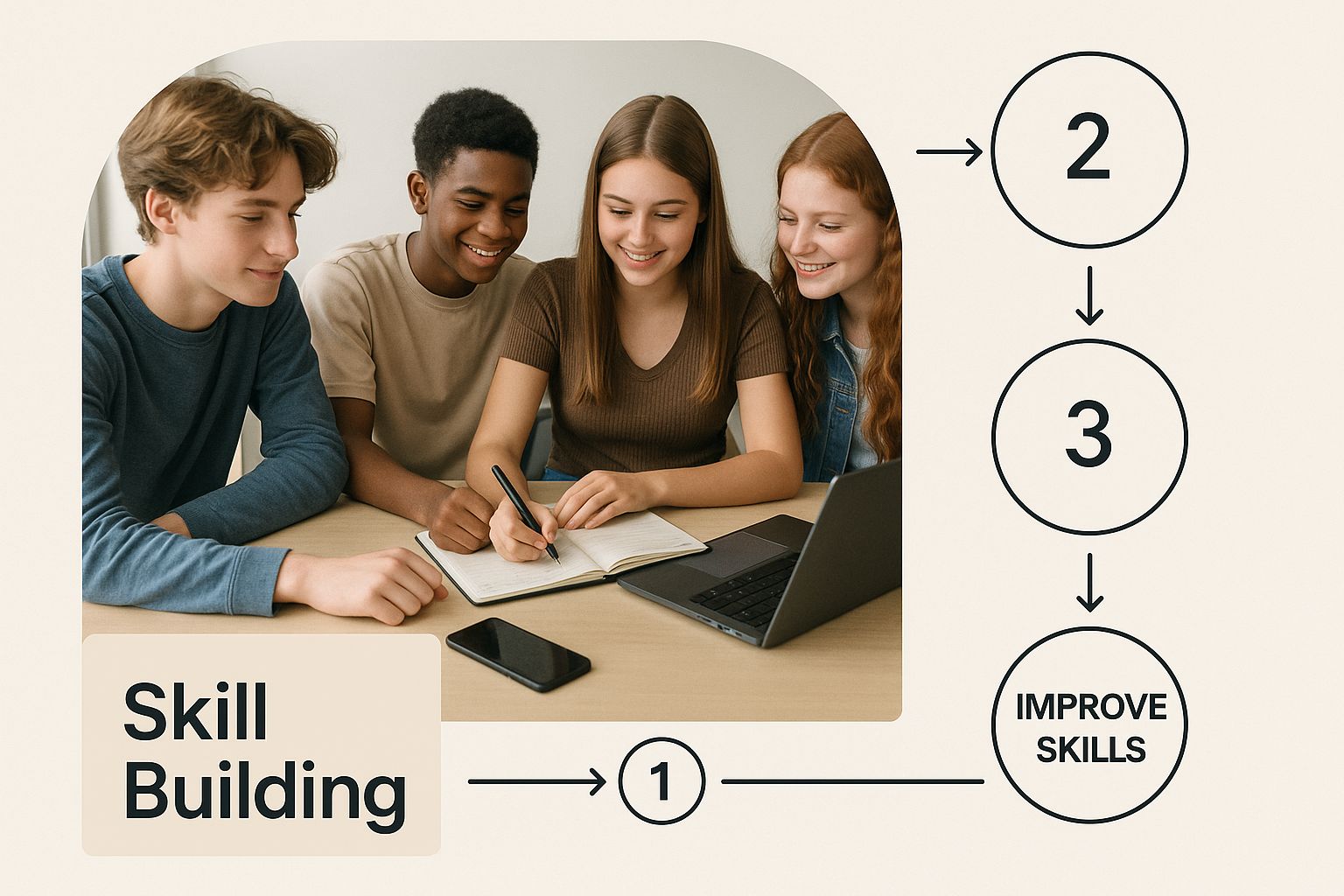
The message is clear: leadership is an active process. You learn it by doing.
Mastering Communication and Connection
Real leadership kicks off with clear communication. And no, that doesn't just mean giving speeches. It’s about active listening, articulating your ideas in a way people understand, and knowing how to give feedback that helps instead of hurts.
When you truly listen to your friends or teammates, you build trust. You create a space where everyone feels valued and heard, which is the foundation of any great team.
A simple way to practice this is in low-stakes situations. During your next group assignment, try summarizing what someone just said before adding your own thoughts. It’s a small move that shows you're paying attention and respect their input. To guide others well, you first have to master your own abilities, including developing strong critical thinking skills to sort through information and make solid calls.
Here’s a quick look at the skills that really matter and how you can start working on them today.
Essential Leadership Skills for Teens
| Core Skill | What It Looks Like | First Actionable Step |
|---|---|---|
| Active Listening | Putting your phone down and making eye contact when someone is talking to you. | Next time a friend tells you a story, ask one clarifying question instead of just waiting for your turn to speak. |
| Self-Awareness | Recognizing when you're feeling stressed and figuring out what triggered it. | Keep a simple journal for one week. Write down one thing that went well each day and one thing that was challenging. |
| Decision-Making | Weighing the pros and cons before choosing what to do on a Friday night, instead of just going with the flow. | For a small decision (like what to eat for dinner), consciously list three options and pick one based on a clear reason. |
| Empathy | Trying to understand why a teammate is frustrated instead of just getting annoyed with them. | The next time you disagree with someone, take 30 seconds to genuinely consider their point of view. |
| Accountability | Owning up to it when you forget to do your part of a project, instead of making excuses. | Apologize for one small mistake this week, without adding "but…" to the end of it. |
Starting with these small, intentional actions builds the muscle memory you need for bigger leadership moments down the road.
Conquering Procrastination and Boosting Motivation
Let's be real: juggling school, sports, friends, and everything else is tough. Procrastination is one of the biggest hurdles for any teenager. But here’s the thing—you can't lead others if you can't lead yourself first.
Getting a handle on procrastination is a huge piece of that self-management puzzle.
You don't need a massive life overhaul. Simple, structured techniques can make all the difference. Instead of staring at a giant project and feeling overwhelmed, you just need to break it down.
- Try the Pomodoro Technique: Work in a focused 25-minute sprint, then take a 5-minute break. It makes just getting started feel so much easier.
- Batch Your Tasks: Group similar things together. Spend one block of time just answering texts and emails, and another dedicated only to studying for that bio test.
- Set Micro-Goals: Don't just say, "I'll study for the final." Get specific: "I will review chapter one notes for 30 minutes." Nailing these small wins builds momentum and makes you feel like you're actually getting somewhere.
Leadership is about taking ownership. When you learn to manage your own time and beat procrastination, you build the discipline and reliability that makes other people naturally want to trust and follow you.
Fostering Mental Health and Resilience
Leadership comes with pressure. It's not always easy, which is why you have to build up your mental resilience. That just means having the ability to bounce back when things don't go your way.
A failed project or a tough conversation isn't the end of the world. It’s a chance to learn something.
Parents and mentors can help here by reframing what "failure" means. It's not a bad grade; it's a stepping stone. When you hit a roadblock, ask yourself, "What did I learn from this?" or "What would I do differently next time?"
This simple shift helps you build a growth mindset, which is non-negotiable for any good leader. Having strong mental health resources, like those from The Jed Foundation, can also give you the tools you need to manage stress and build those essential coping skills.
A Parent's Guide to Nurturing Leadership

As a parent, your job isn't to direct your teen’s every move. It’s to be a gardener. Your role is to create the right environment for their natural leadership abilities to actually flourish, not to force growth in a specific direction.
This all starts with a simple shift: stop giving commands and start asking questions.
Instead of telling your teen exactly how to solve a problem with their school project, try asking, "What are your ideas for handling that?" It’s a small change, but it signals that you trust their judgment and encourages them to think for themselves. Letting them make small, low-stakes decisions—and even fail sometimes—is how they build the resilience every great leader needs.
Cultivating an Environment of Autonomy and Trust
If you want your teen to step into leadership, you have to be willing to let go of the reins a bit. When they feel trusted to manage their own time and responsibilities, they learn to self-regulate. That’s the foundation for tackling bigger challenges like procrastination and staying motivated.
A practical way to start is by setting expectations with them, not for them. Sit down and talk about their goals for school or a sports team, but let them lead the conversation about how they'll get there. This gives them a real sense of ownership over both the process and the outcome.
Key Parenting Tips for Fostering Leadership
Here are a few actionable strategies you can use to nurture your teen's leadership potential without piling on more pressure:
- Model the Behavior You Want to See: Your actions speak louder than anything. Let your teen see you taking on challenges, admitting when you’re wrong, and listening respectfully to different viewpoints.
- Focus on Effort, Not Just the Outcome: Praise their hard work on a tough assignment, not just the final grade. This reinforces a growth mindset and teaches them that setbacks are just part of the learning process.
- Encourage Passion-Driven Opportunities: Help them find activities they actually care about. A teen who loves animals will be far more motivated to organize a fundraiser for a local shelter than to run for a student council position they feel indifferent about.
Leadership isn't about a title; it's about impact, influence, and inspiration. When you empower your teen to pursue their genuine interests, you're giving them the tools to inspire others authentically.
This approach also helps combat the anxiety so many teens feel about the future. An OECD report highlighted that many teenagers face significant career uncertainty, often because their dreams don't quite match up with labor market realities.
By encouraging them to explore what they’re passionate about through volunteering or school clubs, you’re giving them priceless, real-world experience that builds both confidence and clarity. You can read the full research about teenage career preparation to learn more about this leadership gap.
Finally, always prioritize their well-being. Leadership can be stressful, so it’s vital to support your teen's mental health. Keep the lines of communication wide open and make sure they know where to find resources if they need them. When teens feel secure and supported at home, they’re far better equipped to step up and lead with confidence out in the world.
The Link Between Mental Health and Strong Leadership
Leadership isn’t just about making big speeches or strategic decisions. It’s an inside job. For teenagers, this connection between your inner world and your ability to lead is especially crucial. Let's be real—the pressure to crush it in school, navigate social circles, and step into new responsibilities can send stress and anxiety through the roof.
You can't pour from an empty cup. Real leadership is built on a solid foundation of mental well-being. Skills like self-awareness and emotional regulation aren't just nice-to-haves; they're the absolute pillars that keep a leader from burning out under pressure. When you can understand and manage what's going on inside you, you're in a much better position to guide and support others.
Navigating Stress and Building Resilience
The leadership journey is going to have stress. That’s a guarantee. Procrastinating on a huge project or feeling the weight of a team's expectations can be completely overwhelming. The secret isn't trying to dodge stress altogether—that's impossible. It's about building healthy ways to manage it when it shows up.
This is where self-care becomes a leader's secret weapon. It’s about spotting the early warning signs of burnout, like feeling constantly drained or losing motivation for things you used to love, and then actually doing something about it. A huge part of leadership is creating an environment where people feel safe to contribute without fear, and that always starts with you. Learning how to take care of yourself is the first step in fostering psychological safety for everyone.
Leadership is a marathon, not a sprint. Prioritizing mental health is the fuel that allows a teen to lead sustainably, preventing burnout and fostering genuine, long-term impact.
Developing these skills takes time and practice. For a deeper dive into specific techniques, check out our guide on stress management for teens.
The Parent's Role in Supporting Mental Wellness
Parents, you play a massive role here. Your job is to help your teen see the connection between leading well and feeling well. The goal is to open up a dialogue where it's okay to admit to feeling overwhelmed or stressed out. Instead of piling on more pressure, focus on making home a supportive basecamp.
Here are a few ways you can help:
- Normalize Seeking Help: Talk about mental health support as a sign of strength, not a weakness. Mentioning resources like The Jed Foundation or NAMI should feel as normal as talking about going to a doctor for a physical injury.
- Encourage Downtime: Seriously, remind your teen that rest is productive. A brain that gets a break is more creative, focused, and resilient when it's time to lead a club meeting or grind through homework.
- Focus on the 'Why': Help your teen connect what they're doing to a bigger purpose. When tasks feel meaningful, that intrinsic motivation becomes a powerful defense against procrastination and burnout.
A New Perspective on Leadership and Well-Being
The game has changed. Research is showing that today's teens see leadership in a totally different light. A 2025 global survey from Deloitte revealed that younger generations aren't just trying to climb the corporate ladder; they prioritize work-life balance and doing meaningful work.
The study dropped a powerful stat: 67% of Gen Zs with good mental well-being feel their work has a real societal impact. That number plummets to just 44% for those with poor well-being. The message is clear. For teenagers and leadership, well-being isn't a reward for success—it's a core ingredient.
You can check out more insights on how Gen Z is reshaping leadership on deloitte.com.
Finding the Motivation to Lead and Succeed
Motivation is a tricky thing. One day you’re on fire, ready to crush that history project, and the next, scrolling TikTok feels like the only productive thing you can do. Sound familiar? That up-and-down cycle is completely normal, especially when you’re juggling school, friends, and the giant question of what’s next.
The secret isn't about forcing yourself to feel motivated. It’s about finding a real, genuine reason why something matters to you. This is what we call intrinsic motivation—that powerful drive that comes from inside because you actually find something interesting or fulfilling, not just because you’re chasing a reward. It's the fuel that gets you past procrastination and helps you build real, lasting success.
Connecting Today’s Tasks to Tomorrow’s Goals
Let’s be real: not every homework assignment is going to feel like a life-changing event. The trick is to draw a straight line from these small, sometimes boring tasks to a bigger goal you actually care about.
Say you want to be a video game designer. That brutal math homework suddenly becomes a stepping stone to learning the coding and logic you’ll need to build your own worlds. It’s no longer just a chore; it’s part of your mission.
This simple mental shift changes everything. It turns "I have to do this" into "I'm choosing to do this because it gets me closer to what I want." Parents can help by asking questions like, "How do you think this project could help you with that business idea you have?" instead of just the classic, "Is your homework done?"
When you see the connection between your daily grind and your future dreams, even the most boring tasks get a jolt of purpose. That "why" is what keeps your engine running, even when you feel like you're out of gas.
Building Momentum with Small Wins
Feeling overwhelmed is motivation's worst enemy. A massive project or a distant goal like "get into a good college" can feel so huge that you don't even know where to start. So you don't.
The fix? Break it down. Make it small. Make it so easy you can’t say no.
Instead of a vague goal like "get better grades," get super specific with an action you can take right now.
- Today's Win: "I'm going to spend 20 minutes reviewing my chemistry notes after school."
- This Week's Win: "I'll ask one question in math class and hit up office hours on Thursday."
Every time you knock one of these mini-goals off your list, you get a small hit of accomplishment. It feels good. That feeling builds momentum, turning the fuzzy idea of "success" into a series of real, tangible wins you can point to. If you want to get better at this, check out our guide on how to set SMART goals—it’s a game-changer.
Understanding what makes people tick is a huge part of leadership, and that includes yourself. For anyone interested in the psychology behind this, learning how to motivate students offers some fantastic insights into what drives people to take action.
Got Questions About Teen Leadership? Let's Talk.
When it comes to teens and leadership, a lot of questions pop up. It’s totally normal for parents and teens to wonder about things like personality, packed schedules, and where to even begin. These are the real-world concerns I hear all the time in coaching sessions.
Let's break down some of the most common ones with practical answers, so you can move forward with confidence.
Can a Shy Teen Actually Be a Leader?
Absolutely. I think we have a misconception about what leadership really is. It’s not about being the loudest person in the room—it's about influence, reliability, and making a real contribution.
Quiet leaders are often incredibly effective because they're thoughtful observers and fantastic listeners. They lead by example, and their strength comes from their consistency and depth, not their volume.
Encourage them to find roles that play to these strengths. A shy teen might be the perfect person to manage research for a group project, organize the logistics for a club event, or even offer one-on-one mentorship to a younger student. These actions build the exact same confidence and respect as more visible leadership roles.
Leadership is a skill, not a personality trait. It’s measured by your impact, not your volume. Some of the most powerful leaders I know listen far more than they speak.
How Do I Encourage My Teen Without Being Pushy?
This is a big one. The key is to connect leadership opportunities to what they already love. Pressure comes from pushing them toward things you think they should do, like running for a student council position they couldn't care less about. Encouragement comes from helping them find ways to do more of what they're already passionate about.
Start with curiosity. Instead of saying, "You should be the team captain," try asking, "What's your favorite part about being on the team?" If they say they love strategy, you could suggest they help the coach plan drills. If they enjoy the social side, maybe they could organize a team bonding event.
Here are a few ways to keep it supportive, not stressful:
- Frame it as an opportunity, not a requirement. "Hey, I saw the animal shelter needs volunteers to help with their website. Since you're so good with that stuff, I thought you might find it interesting."
- Celebrate the effort, not just the title. Praise their initiative for trying something new, whether or not it ends in a formal position. The attempt is what matters.
- Focus on service. Helping others is a powerful motivator. Research actually shows that teens involved in community service feel a greater sense of purpose and self-discovery.
My Teen Is Already Overwhelmed. How Can They Possibly Add More?
When a schedule is already bursting at the seams, the idea of adding "leadership" can feel like a ton of bricks. The solution is to think smaller. I call it micro-leadership—small, intentional acts that build skills without a huge time commitment.
Leadership doesn’t have to be a formal position. It can be a simple action taken within their existing routine.
Things like volunteering to lead a five-minute breakout discussion in class, organizing a shared Google Doc for study notes, or simply asking a teacher, "How can I help with this?" are all acts of leadership. These small steps prove that leadership is about what you do, not the title you hold.
At Andrew Petrillo Life Coaching, I specialize in helping teens build these essential skills in a way that feels authentic and manageable. If your teen is struggling with motivation, stress, or finding their direction, a personalized coaching plan can make all the difference. Learn more about how we can help by visiting andrewpetrillolifecoaching.com.
RELATED POSTS
View all