

Forget what you’ve seen in movies. Real leadership isn’t about being the loudest person in the room or just telling people what to do. It’s about something deeper—mastering how you influence, communicate, and bounce back from setbacks. These are skills you build with practice, not something you’re just born with.
It’s a journey that starts with figuring yourself out first so you can connect with and inspire others later.
What Real Leadership Looks Like Today

The old-school image of a leader who just barks orders is completely outdated. Today’s world demands a different approach—one that’s adaptable, collaborative, and genuine.
These aren’t just trendy buzzwords; they’re the skills companies and teams actually value most. In fact, adaptability and collaboration are consistently ranked as top leadership trends because they’re essential for getting through a world that’s always changing.
This guide is your roadmap. It’s built on four core pillars that will help you become a leader in your own life, not just on a team or in a future job.
Here’s a quick look at the core qualities this guide will help you build, and why they matter for your daily life.
The Four Pillars of Modern Leadership
| Leadership Pillar | Why It Matters for Teens & Young Adults |
|---|---|
| Goal Setting & Self-Awareness | Knowing your strengths, weaknesses, and what you want is the foundation. It’s about setting a direction for yourself. |
| Powerful Communication | Learning to share your ideas clearly—and actually listen to others—is how you build trust and get things done. |
| Unshakable Resilience | Life throws curveballs. Resilience is what helps you handle the pressure, learn from failure, and keep moving forward. |
| Genuine Accountability | Taking ownership of your actions, good or bad, shows integrity and earns you real respect. |
Think of these pillars as the building blocks for becoming the kind of person others want to follow, whether it’s on a class project, a sports team, or just in your group of friends.
Why This Matters for You, Right Now
These aren’t just skills for some future career you haven’t even thought about yet. They are essential for right now—for navigating school projects, friendships, and the everyday chaos of being a young adult.
Ever tried to motivate a group for a class assignment when nobody wants to work? That’s leadership. Ever had to manage your own time to stop procrastinating? That’s self-leadership.
When I see teens struggling with procrastination or a lack of motivation, it often comes down to needing better self-leadership skills. For young men who feel a bit lost or disconnected, finding support in men’s groups or with a mentor can be a game-changer for personal growth and finding direction.
The journey to becoming a leader isn’t about becoming someone else. It’s about discovering the best version of yourself and learning how to use your unique strengths to make a real impact.
This process is about more than just doing things; it requires a clear head. Something as simple as a 10-minute meditation practice can be a powerful tool for managing stress and staying focused.
By working on these areas, you start building the confidence and tools to not just get by, but to truly lead—first in your own life, and then everywhere else.
Mastering Self-Awareness to Lead Yourself First
Before you can lead a team, a project, or even a tough conversation, you have to learn how to lead yourself. And that journey starts with self-awareness—really understanding your own internal operating system.
It’s about knowing what drives you, what sets you off, and where your natural talents are. This isn’t about being perfect; it’s about being honest with yourself. Acknowledging a weakness isn’t failure; it’s the first step toward real growth.
Think about it: if you know you’re a chronic procrastinator before big exams, you can build a study plan that gets ahead of the panic. You’re no longer reacting; you’re leading. That’s the core of mature leadership—taking control of your own responses and decisions.
For young men, this can be a tough skill to build alone. That’s where things like Men’s Groups can be so powerful. They offer a space to work on this stuff alongside peers who get it, who are facing similar challenges and chasing similar goals.
Understanding Your Emotional Landscape
A huge piece of the self-awareness puzzle is emotional intelligence. It’s your ability to recognize what you’re feeling and also get a read on what other people are feeling. The first step is often the simplest: just name the emotion. Are you frustrated? Disappointed? Anxious? Each one needs a different game plan.
This infographic breaks down how to manage your emotions into three clear steps. It’s a skill, not a mystery.
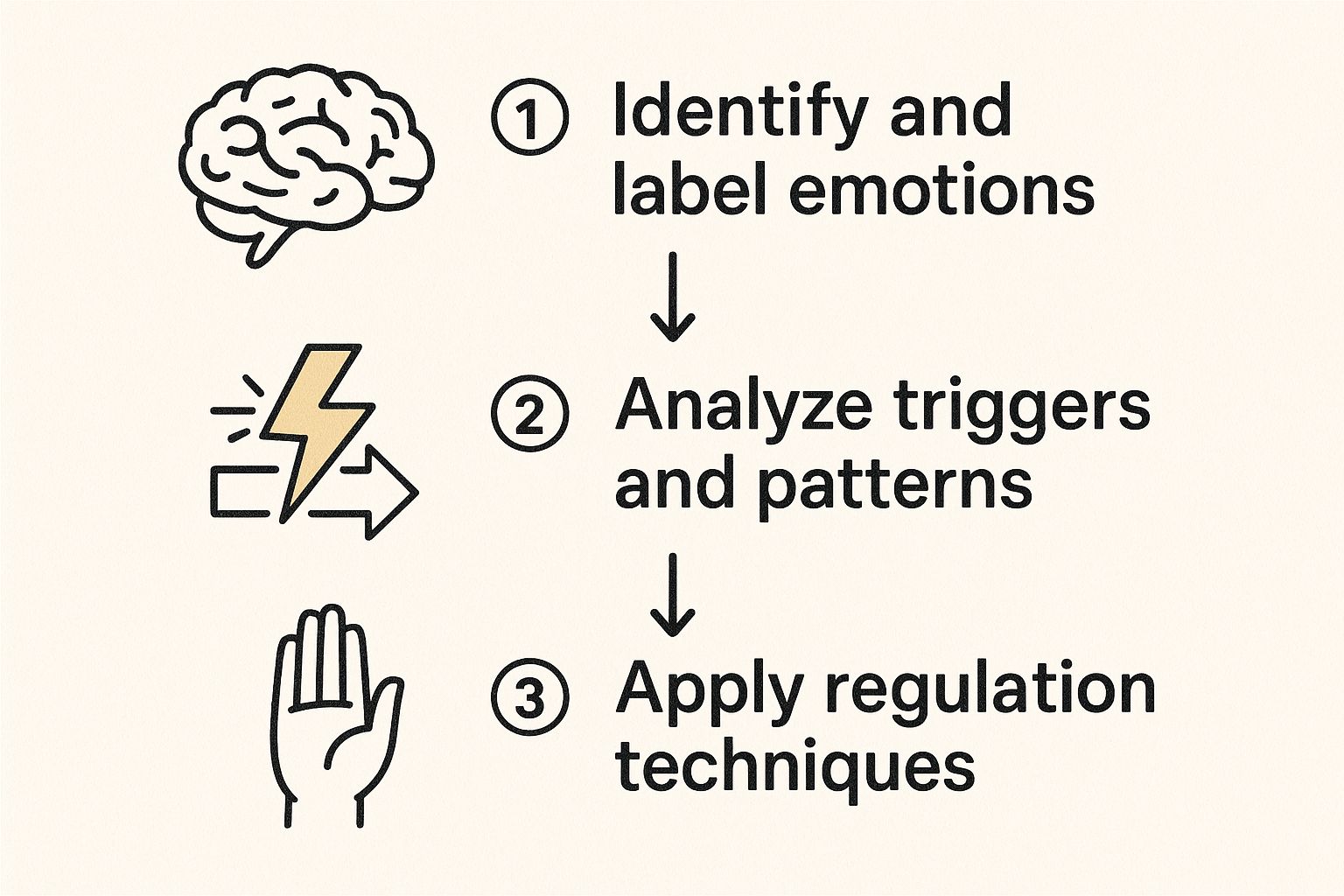
As the visual shows, it’s about identifying the feeling, understanding what caused it, and then choosing a constructive response instead of just letting it run the show.
Building this skill is critical. Unchecked stress can tank your mental health and crush your motivation for school. If you’re struggling, remember that asking for help is a sign of strength, not weakness. There are some incredible resources focused on mental health for teens, offering everything from counseling to simple tools like meditation guides that can help you find your footing.
If you want to go deeper on this, check out these strategies on how to improve self-awareness and take real control of your personal growth.
A leader who understands their own emotions is better equipped to handle pressure, connect with others, and make clear-headed decisions instead of reacting impulsively.
As a parent, you can be a huge part of this. Modeling emotional honesty—talking openly about your own struggles and how you work through them—shows your teen that it’s okay not to have it all figured out. It creates a safe space for them to explore their own feelings without feeling judged.
Building Resilience to Overcome Setbacks

Leadership isn’t some fantasy where you never fail or feel overwhelmed. Far from it. It’s about what you do after you get knocked down. True leaders build the mental toughness to handle the inevitable—academic pressure, social drama, personal disappointments.
This skill, resilience, is the engine that keeps you going, especially when the schoolwork piles up and the urge to procrastinate hits hard.
It all starts with a simple but powerful shift in how you see things.
From Fixed to Growth Mindset
A fixed mindset is a dead end. It’s the voice in your head that says, “I’m just bad at math.” It shuts the door on improvement.
A growth mindset, on the other hand, cracks that door wide open. It says, “Okay, I can get better at math if I practice.” This one small change in perspective fuels your drive to keep trying when things get tough.
When you fail a test, a growth mindset doesn’t see a disaster; it sees a data point. Instead of thinking, “I’m a failure,” you start asking, “What can I learn from this?” This is a core leadership trait because it turns every setback into fuel.
True leadership is demonstrated not in the absence of challenges, but in the persistent effort to overcome them. It’s about viewing every obstacle as a stepping stone.
This mental shift is crucial for managing the intense pressures young leaders often face. For anyone feeling the strain, understanding how to recover from burnout is a key part of staying effective without sacrificing your well-being.
Practical Steps to Beat Procrastination
Let’s be real: procrastination isn’t about laziness. It’s a symptom of feeling completely overwhelmed. The secret is to stop looking at the mountain and just focus on the first few rocks.
- The 15-Minute Rule: Commit to working on that thing you’re dreading for just 15 minutes. Getting started is always the hardest part. You’ll be surprised how often you find the momentum to keep going.
- Identify the Very Next Step: Don’t think about writing the whole essay. What’s the absolute smallest, next physical action? Maybe it’s just “Open a new doc and write my name at the top.” That’s it. Do that.
- Reward Your Progress: Finished your 15 minutes? Did that tiny first step? Give yourself a short, guilt-free break. Watch a YouTube video. Get a snack. This creates a positive feedback loop that your brain loves.
This approach takes a massive, scary task and breaks it down into a series of small, achievable hills. It makes motivation a lot easier to find.
A Simple Meditation Guide for Teens
Mental clarity is your secret weapon against stress. You don’t need to sit on a cushion for an hour; a few minutes can completely reset your focus and calm your mind.
Quick 3-Minute Reset:
- Find a quiet spot where you can sit down without being bothered. Close your eyes.
- Take three deep breaths. Inhale slowly through your nose, then exhale slowly through your mouth. Feel your shoulders drop.
- Focus on your breath. Your mind will wander—that’s normal. Don’t fight your thoughts. Just notice them, and gently guide your attention back to the feeling of your breath.
- Do this for just 3 minutes. When you’re done, slowly open your eyes and notice how you feel.
This simple exercise can make a huge difference in managing the day-to-day grind of school. For those who feel like they’re struggling alone, especially young men, finding support systems is vital. Resources like teen support groups or even Men’s Groups can provide a safe space to build these skills.
If you’re ready to go deeper, you can explore our full guide on https://andrewpetrillolifecoaching.com/how-to-build-mental-resilience/ and learn how to turn every setback into a strength.
Communicating with Confidence and Empathy
Great communication isn’t some magic trait you’re born with—it’s a skill, and like any skill, you can build it. When we think of leaders, we often picture the loudest person in the room, but that’s rarely the case. Real leaders are the ones who connect, persuade, and build trust.
It all comes down to learning how to speak up with confidence, genuinely listen to what others are saying, and handle disagreements without turning them into a huge drama. Getting this right is a huge step in learning how to develop leadership qualities, because it’s not just about talking; it’s about making sure your voice is heard and your ideas are respected.
Speaking with Confidence, Not Arrogance
Confidence starts with believing that what you have to say is valuable. It’s not about being aggressive or a know-it-all; it’s about clarity.
Think about the last time you were in a group project. When you have an idea, don’t just mumble it. Instead of saying, “Maybe we could, like, try this…?” try framing it with the group’s goal in mind. Say something like, “I have an idea that might help us finish the research faster. What if we divide the topics this way?” It’s direct, it’s helpful, and it shows you’re invested in the team’s success. To get more practical with this, you can explore these essential communication skills for teens.
The Power of Active Listening
Leadership is a two-way street. I’ve learned that being a good communicator often means listening way more than you talk. And active listening isn’t just about shutting up and waiting for your turn to speak. It’s about actually trying to understand where the other person is coming from.
Next time a friend is upset, put your phone away. Give them your full attention. Ask questions that show you’re trying to get it, like, “So it sounds like you’re feeling frustrated because…?” This signals that you’re hearing not just their words, but the feeling behind them. It’s a simple act that builds incredible trust.
Empathy is the ability to understand and share the feelings of another. It’s a leader’s secret weapon for building strong, loyal teams and resolving conflicts constructively.
Navigating Conflict with Empathy
Disagreements are going to happen. That’s just life. But the drama that often comes with them? Totally optional. The secret is to focus on the problem, not the person.
Let’s say you’re on a team and you disagree with someone’s idea. Instead of shutting them down with, “That’s a bad idea,” try a different route. You could say, “I see where you’re coming from with that approach. I’m wondering if we’ve considered how it might affect our deadline?”
This little shift keeps the conversation productive and centered on shared goals, not personal feelings. Communication and empathy are some of the most crucial soft skills essential for leadership roles. Learning to handle conflict calmly and respectfully is one of the most mature leadership skills you can build. It proves you have what it takes to guide a team through the tough stuff.
How Parents and Mentors Can Nurture Leadership

Building leadership in a young person isn’t about pushing them to run for student council. It’s about creating an environment at home where independence, resilience, and accountability can actually take root and grow.
As a parent or mentor, your job is to be a guide, not a manager. It means shifting your mindset from controlling every little detail to providing the scaffolding they need to build their own capabilities. This process is everything for their journey—it’s how they learn to lead themselves before they can ever lead others.
Fostering Independence and Resilience at Home
One of the most powerful moves a parent can make is to give their teen age-appropriate freedom. This might mean letting them manage their own school schedule—and deal with the fallout of procrastination. It might mean letting them navigate a conflict with a friend without you swooping in to fix it.
When teens are allowed to make their own choices, they get to make their own mistakes. And that’s where the real learning happens. A missed deadline teaches a lesson about time management that a dozen lectures never could. The goal isn’t to prevent failure; it’s to teach them how to get back up.
Let your child stumble. Letting them experience the natural consequences of their choices is one of the most effective ways to teach them accountability and problem-solving—two cornerstones of leadership.
This approach requires you to model a different kind of communication. Instead of asking, “Did you finish your homework?” try, “What’s your plan for getting your homework done?” That subtle shift moves the conversation from compliance to strategy. It empowers them to start thinking like a leader.
The Power of Mentorship and Support Networks
While family is ground zero for support, getting an outside perspective can be a game-changer. Mentors can offer guidance without the emotional weight that sometimes complicates family dynamics.
For many teen boys that are struggling, finding positive male role models is absolutely essential. This is where dedicated Men’s Groups can make a huge impact. These groups create a safe, structured space for young men to:
- Discuss Challenges Openly: They can talk about the pressures of school, motivation, and mental health with guys who actually get it.
- Build Accountability: When you share your goals with a group, it creates a powerful sense of shared responsibility.
- Develop Emotional Intelligence: These settings make it normal to talk about feelings and well-being, which is critical for healthy development.
These networks are so important because they reinforce the idea that asking for help and building a community isn’t a weakness—it’s a sign of strength.
Resources for Mental Health and Motivation
A teen’s leadership potential is directly tied to their mental well-being. When stress and anxiety are running the show, motivation for school tanks. It’s crucial to have resources ready.
Making mental health support a normal part of life is key. For teens dealing with anxiety or struggling to focus, a simple meditation guide for teens can be a practical place to start. There are tons of apps and online guides that make mindfulness feel accessible, not weird.
When more support is needed, knowing where to turn is critical. Organizations like The Jed Foundation and Active Minds provide excellent resources and research for mental health for teens. These platforms offer everything from crisis support to information on finding therapy, specifically designed for young adults and resources for young men who are facing unique pressures.
By connecting them with these tools, you’re not just helping them manage stress. You’re equipping them with the self-awareness they need to lead themselves first—and eventually, others.
Taking Care of Yourself is Step Zero
You can’t lead others if you’re running on empty. A huge part of developing real leadership qualities is learning how to manage your own internal world—especially when you’re dealing with the constant pressure of school, figuring out your future, and just trying to keep up.
This isn’t just some feel-good advice; it’s a core leadership practice. Prioritizing your mental health is what gives you the foundation to handle everything else.
The pressure doesn’t just disappear after you graduate, either. It actually gets more intense. A recent study found that a staggering 40% of leaders are seriously thinking about quitting their jobs for roles that better support their well-being. That’s a massive jump from just a few years ago. You can see more on these leadership trends over at Korn Ferry’s website.
What does that tell us? Building healthy mental habits right now is one of the smartest career moves you can make.
Finding the Right Support
For teen guys and young men, it can be tough to find the right kind of support—a place where you can actually talk about what’s going on without feeling judged. Fortunately, there are some great resources out there specifically designed for people your age.
Here are a few that can make a real difference:
- JED Foundation: This is a fantastic starting point. They have a ton of solid resources on everything from navigating anxiety to getting mentally prepared for the jump to college.
- Active Minds: A powerhouse nonprofit that’s all about changing the conversation around mental health in high schools and on college campuses. They do a great job of making it okay to not be okay.
- Calm App: Sometimes you just need to quiet the noise. This app offers guided meditations and mindfulness exercises that are perfect for cutting through stress and getting your focus back on track.
Got Questions? We’ve Got Answers
Parents and teens often have questions about what it takes to build real leadership skills. Here are a few of the most common ones I hear.
How Can Parents Support Their Teen’s Leadership Journey?
This is a big one. As a parent, you play a huge part in shaping how your teen sees themselves and the world. One of the most powerful things you can do is model resilience.
Instead of hiding your own struggles, talk about them. Share a story about a time you messed up at work and what you learned from it. This simple act shows your teen that failure isn’t something to be afraid of—it’s just part of the process of getting better.
It’s also crucial to encourage them to solve their own problems instead of jumping in with a quick fix. When your teen is dragging their feet on homework or struggling with motivation, try asking something like, “What’s one small thing you could do right now to get started?” This empowers them to think for themselves and take that first step.
What Resources Are Best for a Teen Boy Who Is Struggling?
It’s so important for young men to have safe spaces where they can be real about their challenges. The right resources can make all the difference, and they often focus on building community and sharing experiences.
Here are a few I often recommend:
- Men’s Groups: These offer a structured environment where young men can connect with peers and positive role models. It’s a great way to build accountability and emotional intelligence without feeling judged.
- The Jed Foundation: This organization has some of the best mental health resources for teens out there, with articles and guides specifically for young men navigating stress and pressure.
- A Simple Meditation Guide for Teens: Mindfulness is a game-changer. Apps like Calm or Headspace offer short, guided meditations that can help reduce anxiety and sharpen focus—two essential tools for any leader.
The most powerful thing you can do is normalize the conversation around mental health. Frame it as building a core strength—like training for a sport—not fixing a problem.
When you combine practical support at home with access to the right resources, you create an environment where a young person’s potential as a leader can really take off.
At Andrew Petrillo Life Coaching, we give teens and young adults the specific tools they need to break through challenges with motivation, school, and procrastination. If you’re ready to build real-world confidence and leadership skills, learn more and book a complimentary discovery call at https://andrewpetrillolifecoaching.com.