

Student life often feels like a constant juggling act. Between looming deadlines, exam pressures, social obligations, and future planning, it's easy to feel overwhelmed. This persistent pressure can lead to chronic stress, which manifests as burnout, anxiety, and persistent procrastination, making it even harder to keep up. The cycle is exhausting, but it doesn't have to be your default state. Developing effective stress management techniques for students is not about eliminating stress entirely; it's about building a toolkit to navigate it with resilience and control.
This guide moves beyond generic advice to offer practical, actionable strategies tailored for the unique challenges you face. We will explore a range of methods, from mindfulness and breathing exercises to cognitive reframing and strategic time management. I'll share my own experience, including how my mom took me to yoga instead of church, which introduced me to powerful regulation practices like breathwork that I still use today. These techniques helped me become more grounded, focused, and capable of managing academic demands. By implementing these strategies, you can learn to reduce anxiety, enhance your motivation, and build a sustainable foundation for success in school and all other areas of your life. Let's dive into your personal toolkit for achieving calm and focus.
1. Mindfulness Meditation: Finding Your Anchor in the Academic Storm
Mindfulness is the practice of being fully present and aware of where you are and what you’re doing. It’s a powerful stress management technique for students because it pulls you out of the cycle of worrying about future exams or dwelling on past academic mistakes. Instead of being carried away by the storm of academic pressure, mindfulness provides an anchor, grounding you in the present moment.
My own journey with this began when my mom, noticing how overwhelmed I was, suggested we try yoga instead of our usual Sunday church. It was there I first learned regulation techniques, like breathwork, that connected my mind and body. This practice of being present helped me manage my emotions, quiet the mental noise, and dramatically improve how I handled the pressures of school. When I am grounded in myself, I can really get the most out of managing my stress. When I can focus and bring me in my body, I can get the most out of managing my stress. Breathwork is what I use now.

Why It Works for Students
Mindfulness meditation has been shown to reduce activity in the amygdala, the brain's "fight or flight" center, while increasing activity in the prefrontal cortex, which is responsible for focus and decision-making. For students, this translates into improved concentration, better emotional control, and a significant reduction in anxiety and procrastination.
Many universities now integrate these practices into their student wellness programs. Institutions like UCLA's Mindful Awareness Research Center and Harvard University offer courses and resources specifically for students, acknowledging the profound impact mindfulness has on academic performance and mental health. These programs, often based on the Mindfulness-Based Stress Reduction (MBSR) model developed by Jon Kabat-Zinn, provide structured ways to build this essential skill. For a deeper look into how these practices can benefit young adults, you can find a wealth of information about meditation for teens here.
How to Implement Mindfulness
Getting started is simpler than you might think. You don't need hours of silent contemplation; consistency is more important than duration.
- Start Small: Dedicate just 5-10 minutes each day. You can do this in the morning to set a calm tone for the day or during a study break to reset your focus.
- Use Guided Apps: Apps like Headspace and Calm offer guided meditations specifically designed for focus, stress, and sleep, making it easy to begin.
- Focus on Your Breath: Find a quiet space, close your eyes, and simply pay attention to the sensation of your breath entering and leaving your body. When your mind wanders, gently guide it back to your breath without judgment.
- Be Patient: This is a skill, and like any skill, it takes practice. Don't get discouraged if your mind feels busy at first. Consistency will build your mental "muscle."
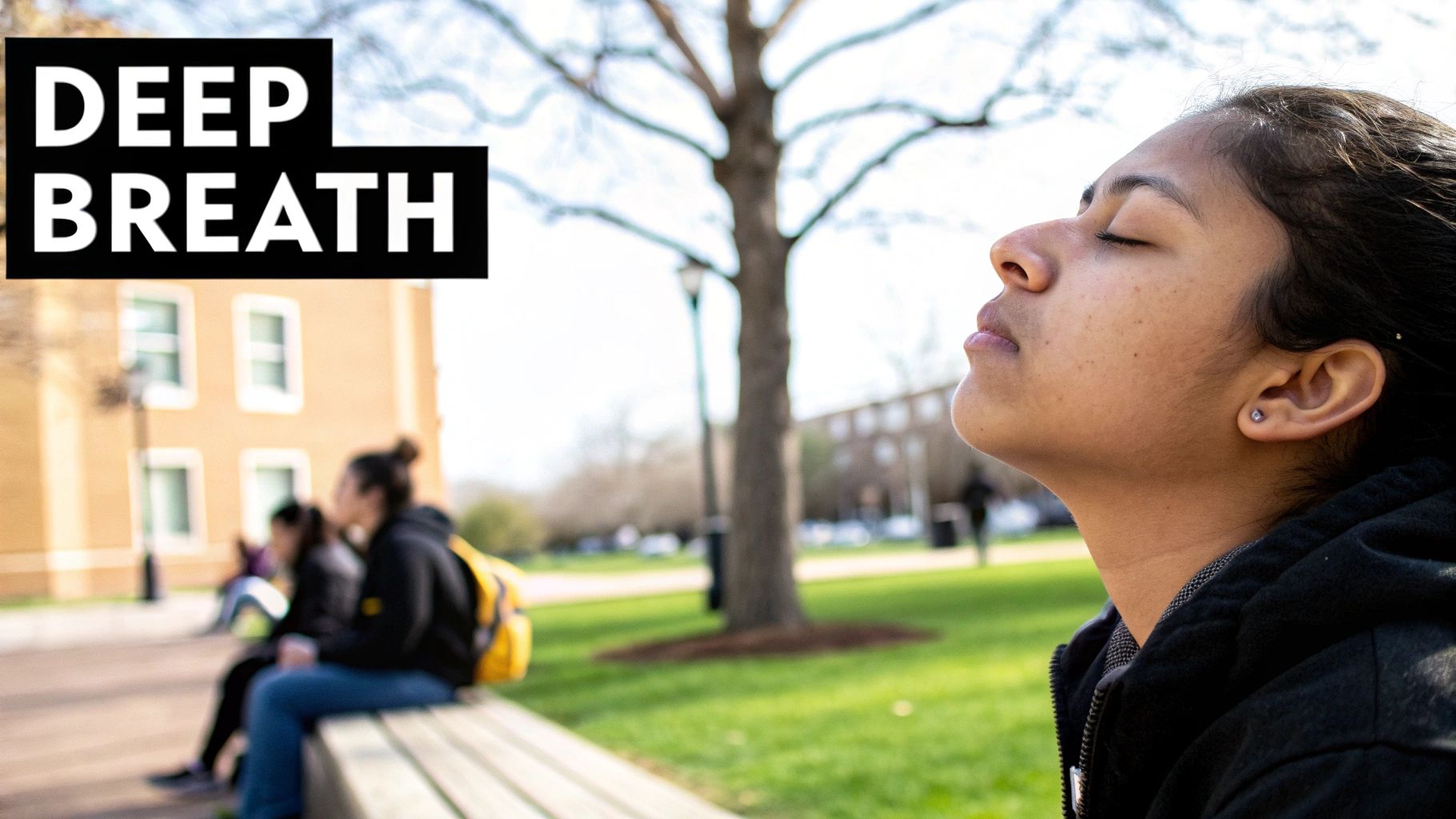
2. Deep Breathing Exercises: Your On-Demand Calm Button
Deep breathing exercises are one of the simplest yet most effective stress management techniques for students. They act as a direct line to your nervous system, activating the parasympathetic "rest and digest" response. This powerful physiological shift helps you quickly lower stress hormones like cortisol, slow your heart rate, and bring a sense of immediate calm, even in the middle of a high-pressure exam or overwhelming study session.
I remember first truly understanding this connection during my senior year. A professor, seeing the collective panic before a major final, had us all put our pens down and guided us through a simple breathing exercise. The palpable tension in the room dissipated in minutes. Learning to intentionally regulate my breath gave me a portable tool I could use anywhere, from a crowded lecture hall to a quiet library, to regain control and focus my mind.
Why It Works for Students
When you're stressed, your breathing becomes shallow and rapid, signaling danger to your brain. Conscious deep breathing reverses this signal, telling your brain that you are safe. This process reduces anxiety and enhances cognitive function, which is crucial for learning and memory recall. It’s a biological reset button.
This technique is so effective that it's taught in high-performance environments, from Navy SEALs using box breathing to maintain composure to medical schools incorporating breath awareness to help students manage the intense pressure of their studies. Dr. Andrew Weil popularized the 4-7-8 breathing technique as a "natural tranquilizer for the nervous system," offering a structured method to combat acute stress.
How to Implement Deep Breathing
Integrating these exercises into your routine is straightforward and requires no special equipment, just a few moments of intentional focus.
- Try the 4-7-8 Technique: A method popularized by Dr. Andrew Weil. Inhale through your nose for a count of 4, hold your breath for a count of 7, and then exhale completely through your mouth for a count of 8. Repeat 3-4 times.
- Use Box Breathing: Inhale for 4 seconds, hold your breath for 4 seconds, exhale for 4 seconds, and hold again for 4 seconds. This creates a balanced, rhythmic pattern that can steady your nerves.
- Practice When Calm: Don't wait until you're panicking to try these. Practicing daily when you are relaxed builds the "muscle memory" so the technique is more effective when you are under stress.
- Anchor with Your Body: Place one hand on your belly and one on your chest. As you breathe in, focus on making your belly rise more than your chest. This ensures you're doing deep, diaphragmatic breathing.
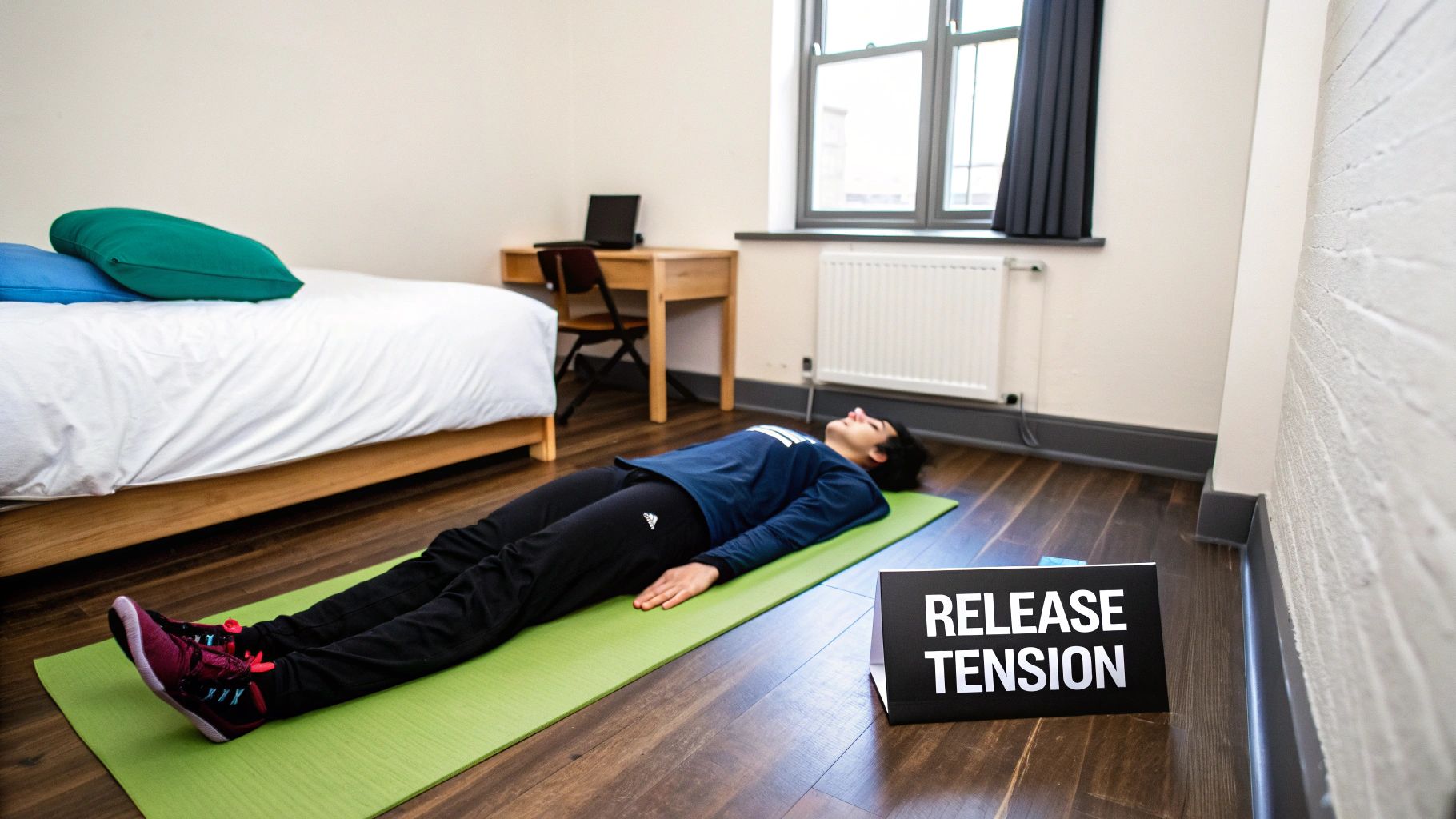
3. Progressive Muscle Relaxation (PMR): Releasing Tension from Body and Mind
Progressive Muscle Relaxation (PMR) is a deep relaxation technique where you systematically tense and then release different muscle groups. Developed by physician Edmund Jacobson, this method is a powerful stress management technique for students because it directly targets the physical symptoms of anxiety. Academic pressure often manifests as clenched jaws, tight shoulders, and headaches, and PMR teaches you to consciously identify and let go of this physical tension, which in turn calms the mind.
This practice is about building awareness. Often, we don't even realize how much stress we are holding in our bodies until we are guided to release it. By focusing on the contrast between tension and relaxation, you learn to gain control over your body's stress response, making it easier to manage academic pressures like exam anxiety or the strain of long study sessions.
Why It Works for Students
The core principle of PMR is that mental calmness is a natural result of physical relaxation. For students, this connection is critical. When your body is tense, it's difficult to focus, absorb information, or think clearly. By actively releasing muscle tension, you signal to your nervous system that it's safe to relax, reducing the production of stress hormones like cortisol and lowering your heart rate.
Many university counseling centers now teach PMR to help students combat test anxiety and manage the high-stakes pressure of academic life. For example, medical students use it to calm their nerves before clinical rotations, and graduate students find it invaluable for preparing for a thesis defense. The American Psychological Association notes its effectiveness in treating stress-related conditions, highlighting its value as a practical, non-pharmacological tool for student well-being.
How to Implement PMR
Integrating PMR into your routine is straightforward and can be done almost anywhere you can sit or lie down comfortably.
- Follow a Sequence: Start with your feet and work your way up your body. Tense the muscles in your toes for 5-7 seconds, then release them completely for 20-30 seconds, noticing the feeling of relaxation.
- Isolate Muscle Groups: Move systematically through your calves, thighs, glutes, abdomen, back, arms, hands, shoulders, neck, and face.
- Use Guided Audio: When you're first starting, guided PMR scripts (easily found on YouTube or relaxation apps) can walk you through the process, ensuring you don't miss any muscle groups.
- Adapt for Study Breaks: You don't always need a full 20-minute session. A quick 5-minute version focusing on the shoulders, neck, and jaw can provide immediate relief during a study marathon.
4. Time Management and Organization: Building a Stress-Free Schedule
One of the biggest sources of student stress is the feeling of being overwhelmed by a mountain of assignments, deadlines, and commitments. Effective time management and organization are foundational stress management techniques for students because they transform chaos into a structured, manageable plan. Instead of reacting to last-minute pressures, you proactively control your schedule, which significantly reduces anxiety and prevents the dreaded cycle of cramming and burnout.
When I was drowning in college applications and advanced coursework, I felt like I was constantly behind. My dad, an engineer, sat me down and introduced me to time-blocking, a method where you schedule every part of your day. It felt rigid at first, but I quickly realized it was liberating. By assigning specific times for studying, breaks, and even worrying, I regained a sense of control and my stress levels plummeted. It taught me that structure is the key to academic freedom.

Why It Works for Students
Systematic planning directly counters procrastination and the anxiety it fuels. When a large project or exam period looms, breaking it down into smaller, scheduled tasks makes it less intimidating and easier to start. This approach fosters a sense of accomplishment with each completed task, building momentum and motivation.
Many successful students adopt frameworks popularized by experts like David Allen (Getting Things Done) and Francesco Cirillo (The Pomodoro Technique). These methods are not just about creating to-do lists; they are about creating a reliable system you can trust. This frees up mental energy that would otherwise be spent worrying about what you might be forgetting, allowing you to focus completely on the task at hand. Developing these skills is crucial, and you can explore more strategies for effective time management for students here.
How to Implement Time Management
Integrating these strategies into your routine can create immediate relief and long-term benefits.
- Break It Down: Divide large assignments or study goals into smaller, concrete steps. Instead of "Study for History Final," list "Review Chapter 5 Notes" and "Create Flashcards for Key Dates."
- Prioritize Ruthlessly: Use a system like the Eisenhower Matrix to decide what’s urgent and important. This helps you focus your energy on high-impact tasks and avoid getting bogged down by busywork.
- Use Digital Tools: Leverage apps like Notion, Todoist, or Google Calendar to organize tasks, set reminders, and visualize your schedule.
- Embrace Time-Blocking: Schedule specific blocks of time for studying, classes, meals, and relaxation. This creates a predictable routine and protects your time from distractions.
- Review and Adapt: Dedicate 15 minutes at the end of each week to review what worked and what didn't. Adjust your system to better fit your needs and evolving schedule.
5. Regular Physical Exercise: Moving Your Body to Calm Your Mind
Regular physical exercise is one of the most potent and accessible stress management techniques for students. It acts as a natural reset button, combating the mental fatigue and anxiety that build up from academic demands. Instead of letting stress accumulate, physical activity provides a direct and healthy outlet, channeling nervous energy into productive motion and leaving you feeling calmer and more capable.
When I first started college, I often felt like a bundle of nerves, and my focus would drift after hours of studying. A friend convinced me to join an intramural soccer team. The physical exertion forced me to be present, to focus on the game instead of my anxieties. That post-game feeling of accomplishment and clarity became my go-to remedy for academic stress, reminding me that moving my body was essential for clearing my head.
Why It Works for Students
Exercise triggers the release of endorphins, the body’s natural mood elevators, while simultaneously reducing levels of stress hormones like cortisol and adrenaline. Dr. John Ratey, in his book "Spark: The Revolutionary New Science of Exercise and the Brain," explains how physical activity directly impacts brain function, enhancing memory, focus, and cognitive flexibility. For students, this means better concentration in class, improved information retention, and a greater ability to tackle complex problems.
Universities actively promote this connection by investing in comprehensive wellness programs. Institutions from large state schools to smaller private colleges offer extensive campus recreation facilities, student-led running clubs, and diverse fitness classes. These resources aren't just for athletes; they are designed to support the mental health of the entire student body, acknowledging that a healthy body is fundamental to a resilient and focused mind.
How to Implement Regular Exercise
Integrating exercise into a busy student schedule is about finding what works for you and making it a non-negotiable part of your routine.
- Schedule It In: Treat your workouts like a class or an important appointment. Block out 30-45 minutes in your calendar three to five times a week.
- Find Your Fun: You’re more likely to stick with an activity you genuinely enjoy. Explore intramural sports, campus yoga classes, a local hiking group, or simply dancing in your room.
- Use Campus Resources: Take advantage of the university gym, swimming pool, or group fitness classes. These are often included in your student fees and provide a motivating environment.
- Start Small and Build: If you're new to exercise, begin with a brisk 20-minute walk each day. The goal is consistency, not intensity. Gradually increase the duration or challenge as you feel stronger.
6. Cognitive Behavioral Techniques (CBT): Rewiring Your Stress Response
Cognitive Behavioral Techniques (CBT) are a powerful, evidence-based approach to managing stress by changing the way you think and act. It’s founded on the idea that our thoughts, feelings, and behaviors are interconnected, and that by identifying and challenging negative thought patterns, we can break the cycle of stress and anxiety. For students, this means learning to dismantle the thinking that fuels academic dread, like believing a single bad grade means you’re a failure.
During a particularly tough semester, I felt trapped in a loop of procrastination fueled by overwhelming anxiety. A university counselor introduced me to CBT, which felt like being handed a user manual for my own brain. Learning to question my automatic negative thoughts, such as "I'll never understand this," and reframe them to "This is challenging, but I can break it down into smaller steps," was transformative. It didn’t just reduce my stress; it gave me back a sense of control over my academic journey.
Why It Works for Students
CBT is highly effective for students because it provides practical tools to manage common academic stressors like perfectionism, fear of failure, and impostor syndrome. By teaching you to become aware of cognitive distortions, such as "all-or-nothing" thinking or catastrophizing, you can actively change your emotional response to challenges. This leads to improved resilience, better problem-solving skills, and a more positive academic mindset.
Pioneered by Dr. Aaron Beck and popularized by authors like Dr. David Burns in "Feeling Good," CBT is a cornerstone of mental health support at universities worldwide. Many college counseling centers offer CBT workshops, and resources like the MindShift CBT app, developed by Anxiety Canada, provide accessible tools specifically for young adults. These programs empower students to become their own therapists, building skills that last a lifetime.
How to Implement CBT
You can start applying CBT principles to your daily student life right away. The goal is to become an objective observer of your own thoughts.
- Keep a Thought Diary: For one week, jot down stressful situations and the automatic thoughts that arise. This helps you identify recurring negative patterns.
- Challenge Your Thoughts: When you catch a negative thought, ask for evidence. Is it 100% true? What’s a more balanced, realistic way to view the situation?
- Use the "What Would I Tell a Friend?" Technique: We are often kinder to others than to ourselves. If a friend had the same thought, what advice would you give them? Apply that same compassion to yourself.
- Reframe "All-or-Nothing" Thinking: Instead of seeing an exam as a pass/fail judgment on your intelligence, view it as a snapshot of your understanding on a particular day. Focus on progress, not perfection.
7. Social Support and Communication: Building Your Academic Lifeline
Navigating the pressures of student life alone can feel like swimming against a strong current. Social support is the lifeline that pulls you through, providing emotional comfort, practical help, and fresh perspectives when you’re overwhelmed. It’s the network of friends, family, mentors, and peers who remind you that you’re not isolated in your struggles. Building this network is a fundamental stress management technique for students.
I learned this firsthand during a particularly tough semester when I was juggling a heavy course load with a part-time job. I felt completely swamped and isolated. It wasn’t until I opened up to a friend in my chemistry lab that things started to change. We formed a small study group, and just knowing others were grappling with the same material made a huge difference. That shared experience and mutual support transformed my stress into a manageable, collaborative challenge.
Why It Works for Students
Research led by figures like Dr. Sheldon Cohen has consistently shown that strong social ties reduce the psychological and physiological impacts of stress. For students, this means having a buffer against academic anxiety, burnout, and procrastination. A supportive network can provide tangible aid, like help with a tough assignment, or intangible support, like a confidence boost before a big exam.
Many schools actively foster these connections through various programs. University counseling centers often run support groups, and resident advisors in dorms work to build a sense of community. These initiatives recognize that a student’s well-being is deeply connected to their sense of belonging. Peer mentoring programs and even online student forums create spaces where asking for help is normalized and encouraged.
How to Implement Social Support
Building a strong support system is an active process that requires effort, but the rewards are immense. It's about finding your community and learning to lean on it.
- Join a Group: Actively seek out student organizations, clubs, or study groups related to your major or hobbies. Shared interests are a natural foundation for strong friendships.
- Maintain Connections: Make time for regular calls with family and catch-ups with old friends. These existing relationships are a vital source of unconditional support.
- Be Open and Honest: Practice vulnerability with people you trust. Sharing your struggles allows others to offer help and strengthens your bond.
- Set Healthy Boundaries: Communication is key. Learn to say no to commitments that will overextend you and clearly express your needs to avoid resentment and burnout.
8. Sleep Hygiene and Relaxation: Restoring Your Mind for Academic Success
Sleep hygiene is the practice of creating habits and an environment conducive to high-quality, restorative sleep. It’s one of the most fundamental stress management techniques for students because a tired brain is a stressed brain. When you’re sleep-deprived, your ability to handle academic pressure, manage emotions, and consolidate memories plummets, creating a vicious cycle of stress and exhaustion.
I used to be notorious for all-nighters, believing that more study hours equaled better grades. My dad, a stickler for routines, pointed out that my grades were actually worse after nights of poor sleep. He helped me create a strict "power-down" hour before bed, no screens allowed. The change was incredible. Waking up rested felt like a superpower; I was more focused, less anxious, and my academic performance improved almost immediately.
Why It Works for Students
Quality sleep is essential for cognitive functions like learning, memory consolidation, and critical thinking. During sleep, the brain clears out toxins, processes information from the day, and recharges for the next. For students, this means better retention of lecture material, improved problem-solving skills, and a more resilient emotional state to handle setbacks.
Recognizing this, many universities have implemented programs to promote better sleep. Campus health centers offer sleep disorder screenings, and student success workshops often dedicate entire sessions to the connection between sleep and academic performance. Experts like Dr. Matthew Walker, author of 'Why We Sleep', have brought mainstream attention to the critical role of sleep, reinforcing its importance for mental and physical well-being. To understand more, you can explore information about the connection between sleep and mental health for teens here.
How to Implement Sleep Hygiene
Improving your sleep isn't about sleeping more; it's about sleeping smarter. Small, consistent changes can make a massive difference.
- Stick to a Schedule: Go to bed and wake up at roughly the same time every day, even on weekends. This stabilizes your body's internal clock.
- Create a Bedtime Ritual: Dedicate the last 30-60 minutes before sleep to a relaxing, screen-free activity like reading a book, gentle stretching, or listening to calm music.
- Optimize Your Environment: Make your bedroom as dark, quiet, and cool as possible. Blackout curtains and a white noise machine can be excellent investments.
- Watch What You Consume: Avoid caffeine and large meals in the hours leading up to bedtime, as they can significantly disrupt your sleep cycle.
Stress Management Techniques Comparison Table
| Technique | Implementation Complexity | Resource Requirements | Expected Outcomes | Ideal Use Cases | Key Advantages |
|---|---|---|---|---|---|
| Mindfulness Meditation | Moderate (requires consistent practice) | None (can be practiced anywhere) | Reduced anxiety, improved focus, better emotional regulation | Long-term stress reduction, study breaks | Scientifically proven, no equipment needed |
| Deep Breathing Exercises | Low (easy to learn) | None | Immediate calm, reduced physical anxiety | During exams, presentations, acute stress | Instant effect, discreet, easy to use |
| Progressive Muscle Relaxation | Moderate to High (15-30 min sessions) | Quiet space, guided audio recommended | Reduced muscle tension, better sleep, deep relaxation | Exam anxiety, physical stress relief | Deep physical relaxation, effective for sleep |
| Time Management and Organization | Moderate (initial setup required) | Tools/apps (calendars, planners) | Reduced overwhelm, better academic performance | Managing workload, deadline pressure | Builds life skills, prevents procrastination |
| Regular Physical Exercise | Moderate (time commitment) | Varies (gym, equipment optional) | Mood enhancement, cognitive boost, stress hormone reduction | Ongoing stress management, mood improvement | Natural mood booster, long-term health benefits |
| Cognitive Behavioral Techniques | High (practice and guidance needed) | Possibly professional support | Long-term stress coping, improved mental health | Deep-rooted stress, cognitive reframing | Addresses root causes, evidence-based |
| Social Support and Communication | Moderate (time and openness needed) | Network of peers, groups | Emotional support, reduced isolation | Building support systems, emotional coping | Enhances well-being, practical help |
| Sleep Hygiene and Relaxation | Moderate (consistency required) | Sleep environment optimization | Better sleep, improved cognition, stress resilience | Nighttime routine, overall stress management | Improves mood, cognitive function, immune health |
Building Your Personalized Stress Management Plan
We've explored a powerful array of stress management techniques for students, from the focused calm of mindfulness meditation to the practical structure of time management. The journey through deep breathing exercises, progressive muscle relaxation, and cognitive reframing offers a path to regain control when academic pressures feel overwhelming. Remember, the goal isn't to perfectly master every single strategy overnight. Instead, the real power lies in building a personalized toolkit that fits your unique needs, personality, and schedule.
From Theory to Practice: Your Actionable Next Steps
The most effective approach is to start small. Don't try to implement all eight techniques at once. Choose one or two that resonate with you the most and commit to practicing them for a week.
- If you struggle with physical tension: Try Progressive Muscle Relaxation (PMR) before bed.
- If your mind races with anxious thoughts: Experiment with a 5-minute guided mindfulness meditation each morning.
- If you feel constantly overwhelmed by deadlines: Dedicate 15 minutes on Sunday to using a planner for the week ahead.
From my own experience, the key was finding a practice that grounded me in my body. When I am grounded in myself I can really get the most out of managing my stress. When my mom started taking me to yoga instead of church, it was a turning point. It introduced me to the profound connection between my breath and my mental state, teaching me practical regulation techniques. Now, breathwork is what I use now. Taking just a few moments to focus on my breath brings me back to the present, allowing me to manage stress with a clear mind. Finding your version of this practice is the first step toward lasting change.
A Note for Parents and Guardians
Your role is crucial in this process. You can support your student by fostering an environment where exploring these tools is encouraged, not mandated. Start a conversation about which techniques seem interesting to them. Perhaps you can even try one together, like a family walk after dinner (Regular Physical Exercise) or establishing a "no-screens" hour before bed (Sleep Hygiene). Normalizing the conversation around mental health and providing access to resources like The Jed Foundation or the National Institute of Mental Health (NIMH) can make a significant difference in their well-being.
Ultimately, mastering these stress management techniques for students is about more than just getting through the next exam or essay. It’s about building resilience, self-awareness, and confidence. It’s about learning how to navigate challenges without letting them derail your motivation or academic performance. By proactively developing these skills, you are laying the groundwork not just for a successful academic career, but for a balanced, healthy, and fulfilling life long after graduation.
If you or your student are ready to move from knowing these techniques to making them a consistent part of your life, personalized guidance can be the key. Andrew Petrillo Life Coaching specializes in helping students build the structure and accountability needed to turn these strategies into powerful, lasting habits. Visit Andrew Petrillo Life Coaching to learn how you can transform your relationship with stress and unlock your full academic potential.




1 thought on “Top Stress Management Techniques for Students in 2025”
Pingback: Why Do I Have No Motivation? Finding Your Drive Again - Andrew Petrillo Life Coaching