
Executive function coaching is a hands-on, forward-looking partnership that helps you build the mental skills to manage life and hit your goals. Think of it like a personal trainer for your brain's "air traffic control system"—the part that handles planning, organization, focus, and keeping your emotions in check. It’s not therapy, which often digs into the past. Instead, executive function coaching is all about creating practical, real-world strategies for right now and for the future.
Unlocking Potential Through Executive Function Coaching

Ever seen a teen with amazing ideas who just can't seem to get a project off the ground? Or maybe you've felt that sinking feeling of a to-do list that just keeps getting longer, no matter what you do. These are classic signs of gaps in our executive function skills—the core brain abilities that let us plan, prioritize, and actually get things done.
Executive function coaching jumps right into those gaps. It’s a structured, supportive process designed to strengthen the mental muscles we all need for success in school, work, and life. A coach helps you understand your unique brain wiring and then build personalized systems that actually work for you, turning that cycle of procrastination and chaos into focused, intentional action.
The Growing Need for Cognitive Skill Development
It's clear that more and more people are looking for this kind of support. Executive function coaching is a huge driver in the global executive coaching market, which is on track to hit around $1.2 billion by 2026, growing at a steady clip of about 9% annually. A big part of that growth is coming from professionals who want to sharpen skills like strategic thinking and stress management—abilities that are directly tied to strong executive functions. You can check out more on the coaching industry's growth and its real-world impact over at Entrepreneurs HQ.
This trend really drives home a key point: these skills aren't just for students struggling with homework. They're essential for success at every stage of life.
Executive function coaching targets a specific set of cognitive skills that are crucial for navigating daily life effectively. Below is a quick breakdown of the core skills we focus on and what they look like in the real world.
Core Executive Function Skills Targeted in Coaching
| Skill | Description | Example in Daily Life |
|---|---|---|
| Planning & Prioritization | The ability to create a roadmap to reach a goal and decide what’s most important. | Breaking a large school project into smaller steps and deadlines. |
| Organization | The skill of arranging information and materials in a logical, accessible way. | Keeping a backpack, digital files, or a workspace tidy to find things easily. |
| Task Initiation | The ability to get started on a task without procrastinating. | Starting homework right after school instead of waiting until the last minute. |
| Time Management | The capacity to estimate how long tasks will take and use time wisely. | Budgeting time for studying, sports, and social activities during the week. |
| Working Memory | Holding and using information in your mind to complete a task. | Remembering multi-step instructions from a teacher without needing them repeated. |
| Metacognition | The ability to think about your own thinking; self-awareness and self-monitoring. | Noticing when you're getting distracted and bringing your focus back to the task. |
| Emotional Control | Managing feelings to achieve goals and control behavior. | Staying calm and not getting overwhelmed when facing a challenging exam question. |
| Flexible Thinking | The ability to adapt your thinking and approach when faced with a new challenge. | Shifting your study plan when a teacher announces a pop quiz. |
By strengthening these fundamental skills, individuals can move from feeling overwhelmed and reactive to feeling confident and in control.
Parenting Tips for a Stronger Foundation
For parents with teens, you can make a huge difference by supporting these skills at home. The key is to be a guide, not a manager. Your goal is to help them build their own sense of independence and resilience.
Here are a few simple strategies to get you started:
- Co-create Systems: Don't just hand them a planner and tell them to use it. Work with them. Ask, "What do you think would help you keep track of assignments? A whiteboard in your room? A shared digital calendar?" When they help build the system, they're far more likely to use it.
- Break It Down Visually: Big projects can feel like climbing a mountain. Grab some sticky notes or open a Google Doc and map out all the small, bite-sized steps together. It makes the whole thing feel less intimidating and tackles procrastination head-on.
- Focus on 'How,' Not Just 'What': Try shifting your questions. Instead of, "Did you finish your history paper?" ask, "How are you planning to tackle that paper tonight?" This encourages them to think strategically instead of just checking a box.
Motivation, Mental Health, and Moving Forward
When a teen seems unmotivated, it's rarely because they're "lazy." It’s almost always a sign that they're feeling overwhelmed, anxious, or just don't know where to start. Procrastination is what we do when our executive function skills can't keep up with the demands in front of us.
Executive function challenges can directly impact a teen's mental health, contributing to anxiety, frustration, and low self-esteem. When a teen consistently feels like they can't meet expectations, it erodes their confidence.
Building these skills isn't just about getting better grades—it's a direct investment in their mental well-being. Great resources like the Child Mind Institute offer a deep dive into how learning challenges and mental health are connected. By giving teens the right tools and support, coaching helps them build not just better habits, but a stronger sense of self-belief and emotional resilience.
The Core Skills Coaching Helps You Build
Executive function coaching isn't some vague self-help promise. It's a focused process, like strength training for the specific mental muscles you use every day to navigate school, work, and life. Think of these skills as your internal toolkit. When everything's in its right place, tasks get done smoothly. When it's disorganized, you feel like you're constantly fighting procrastination, distraction, and a sense of being overwhelmed.
This isn't just about spotting weaknesses. It’s about building practical, real-world abilities. For example, a teen who struggles with Task Initiation—the simple act of getting started—isn't "lazy." They're hitting a cognitive roadblock. Coaching gives them the strategies to clear it.
From Planning to Emotional Balance
A huge part of executive function coaching is building a solid foundation in planning and seeing things through. It’s one thing to know what you need to do. It’s another thing entirely to map out a realistic plan and actually stick to it. This involves a few key skills that all work together.
- Working Memory: This is your brain's temporary sticky note. It’s what lets you hold information in your mind while doing something else, like remembering a teacher's multi-step instructions long enough to write them all down.
- Planning and Prioritization: This is the skill of looking at a big project—say, a research paper—and breaking it down into smaller, manageable chunks. It’s also about deciding what needs to get done now and what can wait.
- Organization: This skill isn't just about a clean backpack or desk; it's about organizing your mental space, too. It’s about creating systems to track materials, deadlines, and ideas so nothing falls through the cracks.
You can see how these three are connected. A student with a strong working memory can hold the project requirements in their head while using their planning skills to create an outline, all while keeping their research notes neatly organized.
Adapting and Managing in the Moment
Beyond just planning, executive function skills are what we pull out when life throws us a curveball or our emotions get the best of us. This is where adaptability and self-regulation come in. These skills are all about how we handle frustration, switch gears between different activities, and stop our feelings from derailing our goals.
For teens, a common challenge is with Shift, which is just another way of saying cognitive flexibility. This is the skill that allows them to smoothly transition from playing a video game to starting homework. When that skill is weak, the transition can feel like hitting a brick wall, often leading to arguments and frustration.
Executive function coaching also strengthens Emotional Control, which is the ability to manage feelings in a way that actually helps you. This skill is what helps a student stay calm during a tough exam instead of panicking, allowing them to access what they’ve studied.
A big piece of effective coaching involves teaching effective time management and productivity strategies, which is especially critical for anyone navigating ADHD. Learning these skills builds self-reliance and confidence. For parents, understanding this can completely change how you support your teen. Instead of getting frustrated over a missed assignment, you can help them build a system for tracking deadlines—a skill that will serve them long after they leave school.
This infographic shows how the benefits of coaching tie directly back to these core skills, leading to better planning, time management, and self-awareness.
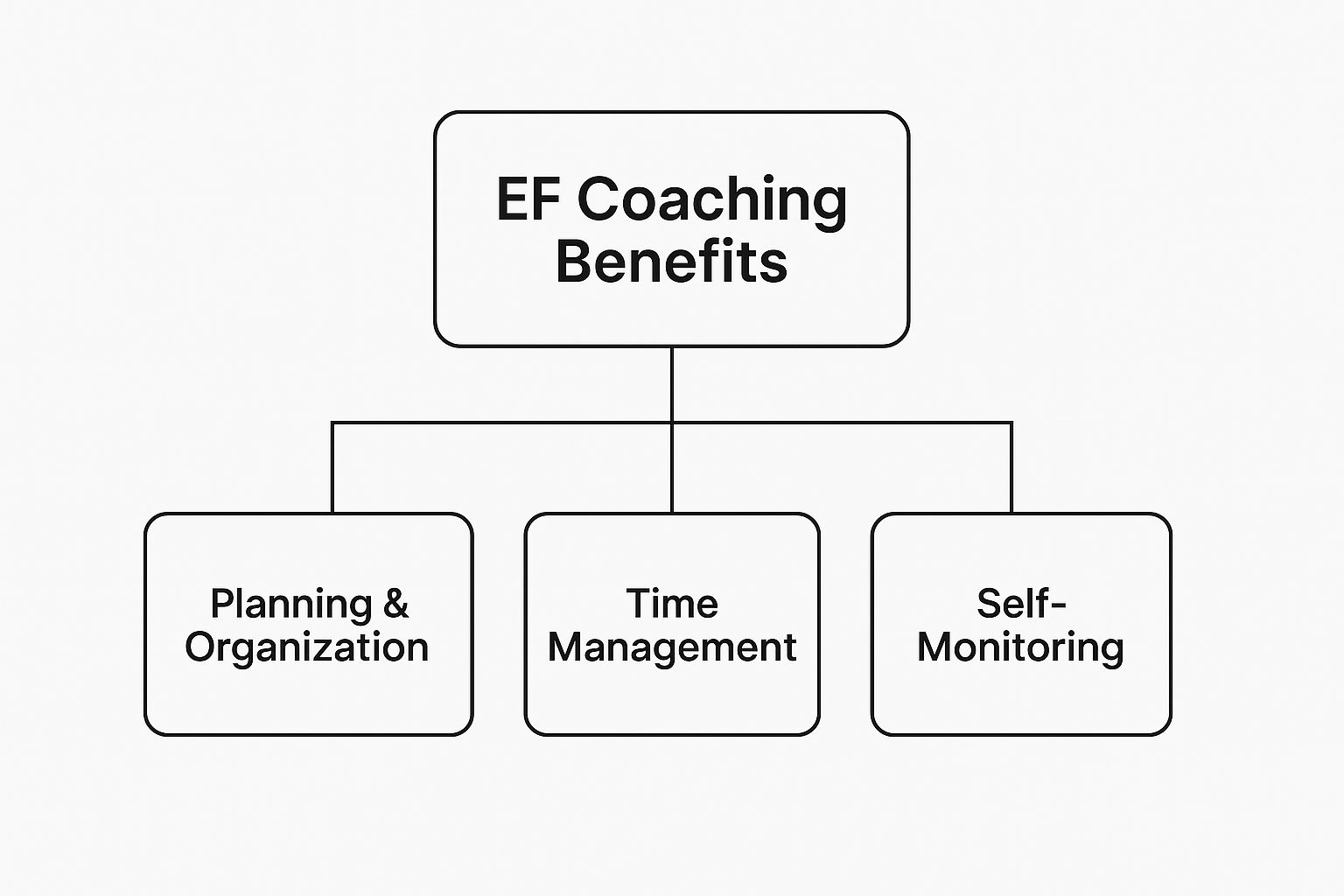
The image really drives home how strengthening these individual cognitive abilities creates a ripple effect, leading to powerful, positive changes in a person's daily life and academic performance.
Ultimately, building these skills is about more than just checking items off a to-do list. It’s about developing the internal structure needed to set meaningful goals and actually achieve them. To learn more about that crucial first step, check out our guide on how to set SMART goals. It’s a framework that turns vague ideas into real, actionable steps—a cornerstone of successful coaching.
Who Benefits Most from an Executive Function Coach

While executive function coaching is often mentioned in the same breath as ADHD, its benefits are much broader. It’s for anyone who feels stuck, overwhelmed, or just knows they aren't performing at their best. Think of it as a tool to sharpen the mental skills you need for success in any part of life, from the classroom to the corner office.
Honestly, executive function skills are life skills. They aren't just for school or for people with a specific diagnosis. They are for anyone who wants to finally close that frustrating gap between their intentions and their actions—to turn "I should" into "I did."
Students Navigating School Demands
Teens and young adults today are dealing with a perfect storm: rising academic pressure, tricky social dynamics, and the expectation of being more independent. Executive function coaching can be a lifeline for students who are clearly smart and capable but just can't seem to figure out the "how" of school.
You see it all the time—the chronic procrastination on a big project or the inability to even start studying for a final exam. A coach helps them break down those overwhelming tasks into small, manageable steps. They learn to create realistic timelines, organize their stuff, and find study habits that actually work with their brain. This isn't just about better grades; it's about tackling the root causes of academic anxiety head-on.
For parents, your role in this is huge. One of the best parenting tips I can offer is to shift from being the "manager" of your kid's schoolwork to being a "consultant." Instead of asking, "Is your homework done?" try asking, "What's your plan for getting your homework done tonight?" It's a small change, but it forces them to think strategically and builds real self-reliance.
Connecting Motivation and Teen Mental Health
Motivation is almost never about laziness. It’s about a lack of clarity or a feeling of being completely swamped. When a teen puts things off, it's usually a coping mechanism for feeling anxious or unsure. Executive function coaching helps rebuild their confidence by giving them a practical toolkit to face those challenges.
A teen's struggle with schoolwork is often a visible symptom of underlying stress and anxiety. According to research on adolescent development, executive function challenges can significantly impact a teen's mental health, leading to feelings of frustration and low self-esteem when they consistently fall short of expectations.
By building skills in planning and just getting started, coaching gives a teen a powerful sense of control and competence. That renewed self-belief is one of the best antidotes to academic anxiety. For more support, organizations like the National Alliance on Mental Illness (NAMI) have fantastic resources for families.
Professionals and Adults in Daily Life
The need for these skills doesn't just disappear after graduation. In the workplace, your ability to manage priorities, think strategically, and lead a team depends entirely on your executive functions. Professionals often come to coaching to get a handle on competing demands, lead more effectively, and avoid burning out.
You can see the demand for this kind of support in the explosive growth of the coaching industry. As more people realize they need help sharpening their cognitive skills, the market is expanding. In fact, the number of certified coaching practitioners jumped from 71,000 to over 126,000 worldwide between 2019 and 2023. This detailed market analysis shows just how much professional development is evolving.
At home, these same skills help adults manage household chores, finances, and family schedules. Coaching can reduce the "mental load" by helping you create simple, efficient systems, which leads to a more organized and less stressful life for everyone involved.
Practical Parenting Tips to Support Your Teen
Supporting a teen with executive function challenges is a delicate dance. You’re not just trying to get them through this week's homework; you're helping them build the bedrock skills they need to launch into a successful, independent life. The real goal is to shift your role from being their task manager to their strategy consultant.
This is a huge transition. Instead of nagging them about deadlines, the conversation becomes about helping them create their own systems for tracking those deadlines. This shift is what builds real self-reliance and creates a supportive home environment where the skills they learn in executive function coaching can actually stick.
Fostering Organization and Planning Skills
One of the best things you can do is make abstract ideas like "organization" and "planning" tangible and visible. Visual aids are your best friend here because they get the swirling chaos out of your teen’s head and into the real world.
- Use Shared Calendars and Whiteboards: A big whiteboard in the kitchen can become command central. Map out the entire week—tests, project due dates, soccer practice, and social plans. Digital tools like Google Calendar are great too, letting you share events and set reminders without having to say a word.
- Break Down the Mountain: A ten-page research paper feels impossible. Sit down with your teen and help them break it into tiny, bite-sized pieces: choose a topic, find five sources, write an outline, draft the intro. Each small step feels doable, which is the secret to killing procrastination before it starts.
By externalizing the planning process, you’re teaching them a repeatable method for tackling any big project. It disarms that paralyzing feeling of being overwhelmed that so often leads to a complete shutdown.
Building Motivation and Combating Procrastination
Let’s get one thing straight: procrastination is almost never about laziness. It’s usually a symptom of something deeper—anxiety, feeling overwhelmed, or just a total lack of connection to the task. Your job is to help them find that connection and to celebrate their effort, not just the final outcome.
Start by linking their schoolwork to things they genuinely care about. If they’re obsessed with video games, maybe that history essay could be about the historical accuracy of their favorite game. This simple reframe can turn a boring assignment into a fascinating one.
Celebrate the effort, not just the A+. When you see them grinding away to study for a test, acknowledge it—even if the grade isn't perfect. This builds a growth mindset and teaches them that resilience and progress matter more than a letter on a report card.
Focusing on the process builds confidence and lowers the fear of failure that fuels procrastination. For more focused strategies, especially for teens with attention challenges, checking out resources on ADHD study tips can offer some incredibly helpful techniques.
To help you put these ideas into practice, here’s a quick guide to pairing common challenges with supportive strategies.
Parenting Strategies for Common Executive Function Gaps
| Teen's Challenge (e.g., Procrastination) | Underlying EF Skill Gap | Supportive Parenting Strategy |
|---|---|---|
| Procrastination on big projects | Task Initiation, Planning | Break the project into small, visible steps on a whiteboard. Focus on starting just the first step. |
| Forgetting homework or deadlines | Working Memory, Organization | Use a shared digital calendar with automated reminders. Have a designated "launch pad" by the door for school items. |
| Difficulty staying focused during homework | Sustained Attention | Introduce the Pomodoro Technique (25 minutes of focused work, 5-minute break). Ensure a distraction-free workspace. |
| Overly emotional reactions to setbacks | Emotional Regulation | Acknowledge their frustration without judgment. Help them name the emotion and brainstorm one small, positive next step. |
| Losing track of papers and materials | Organization | Implement a simple color-coded folder system for each subject. Schedule a weekly 10-minute "backpack clean-out." |
These aren't quick fixes, but consistent, supportive strategies that empower your teen to build their own systems over time.
Connecting Executive Function to Teen Mental Health
It’s so important to see the link between executive function struggles and a teen's mental health. When a teen feels like they’re constantly failing to meet expectations—at school, at home—it can crush their self-esteem and crank up their anxiety. They often internalize these struggles, labeling themselves as "lazy" or "stupid."
This cycle can be incredibly damaging. Research has shown that chronic academic stress is a huge factor in the rise of mental health issues among adolescents. The best thing you can do is open up a dialogue. Let them know these are challenges with brain-based skills, not character flaws.
That conversation can be a lifeline. By offering both emotional support and practical tools, you help them build not just better habits, but a stronger, more resilient sense of self. Learning how to manage their responsibilities is one of the most powerful things they can do for their own well-being. For a deeper look at this, our guide on time management for teenagers offers concrete advice to lower stress and build competence.
What to Expect from Your Coaching Journey

Starting with executive function coaching can feel like a big step, but I want to pull back the curtain so you know exactly what the process looks like. This whole journey is a partnership. It's designed to build your skills and confidence, moving you from feeling constantly overwhelmed to feeling in control.
You’re always in the driver's seat. Think of your coach as the expert navigator and accountability partner sitting beside you.
It all starts with a discovery call. This first chat is where we get to the heart of what's going on—whether it's chronic procrastination on school projects, a schedule that feels impossible to manage, or just a general sense of disorganization. From there, we'll set meaningful, achievable goals that become the roadmap for our sessions together.
The Structure of a Coaching Program
We'll typically meet weekly for action-oriented sessions. This isn’t therapy, where the focus might be on digging into the past. Coaching is all about building practical strategies for what’s happening now and what you want to achieve in the future. Each meeting is a hands-on working session where you’ll learn new tools, practice skills, and we’ll review what worked (and what didn't) from the previous week.
For a teen, this could mean breaking down a massive research paper into small, manageable daily tasks. Or maybe it's developing a system to finally stop forgetting assignments. The focus is always on creating personalized systems that work for your brain, not forcing some one-size-fits-all solution you found online.
Between our sessions, we'll have check-ins to provide a crucial layer of accountability. This helps you keep the momentum going and gives us a chance to troubleshoot any roadblocks that pop up along the way.
Executive function coaching is a team effort. We develop strategies that aren't just theoretical—they're practical tools you can actually use in your day-to-day life. The whole point is to build habits that stick long after our work together is done.
Measuring Progress and Seeing Results
So, how do you know if it's actually working? Progress isn't measured with abstract charts but by real, tangible changes in your life. It’s the feeling of relief when you no longer have to pull all-nighters. It’s feeling less anxiety before exams. It's having more free time because you’ve finally gotten a handle on your schedule.
This kind of skill-building delivers a powerful return that goes far beyond just better grades. For professionals, studies have shown that the average ROI from executive coaching can be nearly six times the initial cost, with some estimates hitting between 500% and 700%. These numbers show just how much core cognitive skills can boost performance. You can explore more about coaching's financial impact over at luisazhou.com.
For parents, your role is simple: be a supportive ally. The best parenting tips I can offer are to encourage your teen to use their new tools and to celebrate their effort, not just the outcome. Your support reinforces the skills they're learning and creates a positive environment where they can grow and build lasting confidence.
Ultimately, this journey is about empowerment—giving you the skills to navigate any challenge, independently and successfully.
Ready to Get Started with Andrew Petrillo?
Making the decision to get support is the single most important step toward a more confident, organized life. If you’re ready to trade overwhelm and procrastination for a real sense of control, my personalized executive function coaching is designed to help you get there.
I built this approach from my own experience overcoming ADHD to succeed as an engineer. The focus is on practical, real-world strategies that build skills for life. This isn’t a one-size-fits-all program—it’s a partnership where we build the focus, motivation, and resilience you or your teen needs to finally thrive.
Your Simple Path to Lasting Change
Getting started is simple and completely pressure-free. The whole thing starts with a conversation to make sure this is the right fit for your family and your goals.
- Book Your Complimentary Discovery Call: The first step is a free, 20-minute discovery call. Think of it as a relaxed, no-obligation chat where you can share your challenges, ask questions, and get a feel for my coaching style.
- Define Your Goals: During the call, we’ll talk about what’s really going on—whether it’s school performance, motivation, or managing anxiety. We'll work together to pinpoint one or two key goals that will anchor our coaching journey.
- Create a Personalized Plan: If you decide to move forward, I’ll build a structured plan for our sessions. This roadmap is based on your specific objectives, making sure every session is focused, productive, and gets you closer to where you want to be.
What to Expect in Your First Conversation
This initial call is a judgment-free space to just explore what’s possible. My goal is to listen and understand your unique situation. We’ll likely touch on:
- The specific roadblocks you're facing, like procrastination or test anxiety.
- What you’ve tried before and why it didn’t stick.
- Your vision for success—what would a more organized, less stressful life actually look and feel like?
This first conversation is all about connection and clarity. It's your chance to see how a supportive, action-oriented coaching relationship can make a real difference, building not just better habits but a stronger sense of self-belief.
Investing in executive function coaching is an investment in personal growth and future success. You’ll walk away from that first call with a clear idea of the path forward, feeling ready to take the next step.
Ready to make a change? Schedule your complimentary discovery call with Andrew Petrillo today and start building the skills for a more confident future.
Common Questions About Executive Function Coaching
Even after learning how it all works, it’s completely normal to have some lingering questions about executive function coaching. I get it. This is a big investment in your personal growth, and getting straight answers is the only way to feel confident about taking the next step. I’ve put together some of the most common questions I hear to clear up any final uncertainties.
Think of this as the last piece of the puzzle—the clarity you need to make a great decision for yourself or your teen.
Is Executive Function Coaching the Same as Therapy
This is a really important one. While both are powerful partnerships, they have very different jobs. Therapy is often about healing the past—working through emotional trauma, processing deep-seated feelings, and treating clinical diagnoses like depression or anxiety.
Executive function coaching, on the other hand, is all about moving forward. It’s action-oriented. A coach’s role is to help you build practical, real-world systems and strategies to get a handle on daily tasks, become more productive, and hit your future goals. We absolutely touch on emotional well-being, but the main event is developing the "how" of getting things done.
How Long Until I See Results from Coaching
Everyone’s timeline is a little different, but most of my clients start noticing small but meaningful shifts within the first few weeks. These early wins might be as simple as finally using a planner consistently or feeling that wave of overwhelm start to shrink when a big school project comes up.
But building the big, life-changing skills—like finally kicking chronic procrastination to the curb or creating an organizational system you can actually stick with—usually takes about three to six months of consistent work. The goal isn’t a quick fix. It’s about building strategies that will stick with you for life.
Do I Need an ADHD Diagnosis to Benefit
Absolutely not. While coaching is a game-changer for people with ADHD because it directly targets those core executive function struggles, it’s really for anyone who feels stuck when it comes to planning, organization, motivation, or time management. The strategies we use are universal.
I work with successful professionals, overwhelmed students, and busy parents who don’t have any diagnosis at all. They just want to better manage the chaos of modern life. It's a powerful tool for anyone looking to dial down the stress, actually follow through on their intentions, and operate at their best, labels aside.
It's a common myth that struggling with focus or procrastination automatically means you have a specific diagnosis. The truth is, these are human challenges. Coaching provides human-centered solutions that work for anyone who wants to improve how they show up each day.
What Is the Parent's Role in Teen Coaching
Parents are a huge part of the team. A teen's success in coaching is a collaborative effort, and the support you provide at home can make all the difference. While the one-on-one sessions I have with a teen are confidential—that’s how we build the trust needed for real, open conversation—I always keep parents in the loop.
With the teen’s permission, I give regular progress updates and share practical parenting tips on how you can best support the new habits and strategies at home. This teamwork creates a consistent, encouraging environment where new skills can really take root. When a family works together, it helps a teen build not just academic skills but a stronger sense of self-worth and drive. To learn more about this, you can check out my resources on how to find motivation and support your teen.
Are you ready to stop the cycle of procrastination and build the skills for a more organized, confident future? The coaching journey with Andrew Petrillo Life Coaching is designed to provide the specific tools and support you or your teen need to thrive. Schedule your complimentary discovery call today and take the first step toward lasting change.




1 thought on “A Guide to Executive Function Coaching”
Pingback: What Is Executive Functioning? Key Insights & Strategies - Andrew Petrillo Life Coaching