

Think of a teen life coach as a personal trainer, but for life skills instead of the gym. A PT helps you build physical strength and endurance, while a life coach helps a teen build the mental and emotional muscle to navigate their world.
It’s not about fixing a ‘problem teen’. It’s a proactive partnership—a space where a young person can build real-world resilience, confidence, and a sense of direction.
Understanding a Life Coach for Teens UK
At its core, the coaching relationship is a dedicated, non-judgmental space for a teenager to explore their goals, fears, and ambitions. It’s a place to build a practical toolkit for managing the pressures that come with growing up today, from school stress to the endless scroll of social media.
Bridging the Gap in Teen Support
So, where does a coach fit in? Parents offer love and essential guidance. Therapists provide critical clinical support for mental health conditions. A life coach sits right in the middle, focusing squarely on the present and the future. They help teens connect the dots between where they are now and where they want to go.
This kind of support is more important than ever. The demand for certified youth life coaches in the UK is growing, and for good reason. With pressures like intense social media exposure and fierce academic competition, young people are often looking for support beyond the usual places. You can find more insights on the rise of youth coaching from organisations like worthit.org.uk.
This infographic really shows how a life coach for teens in the UK adds a unique and necessary layer of support.
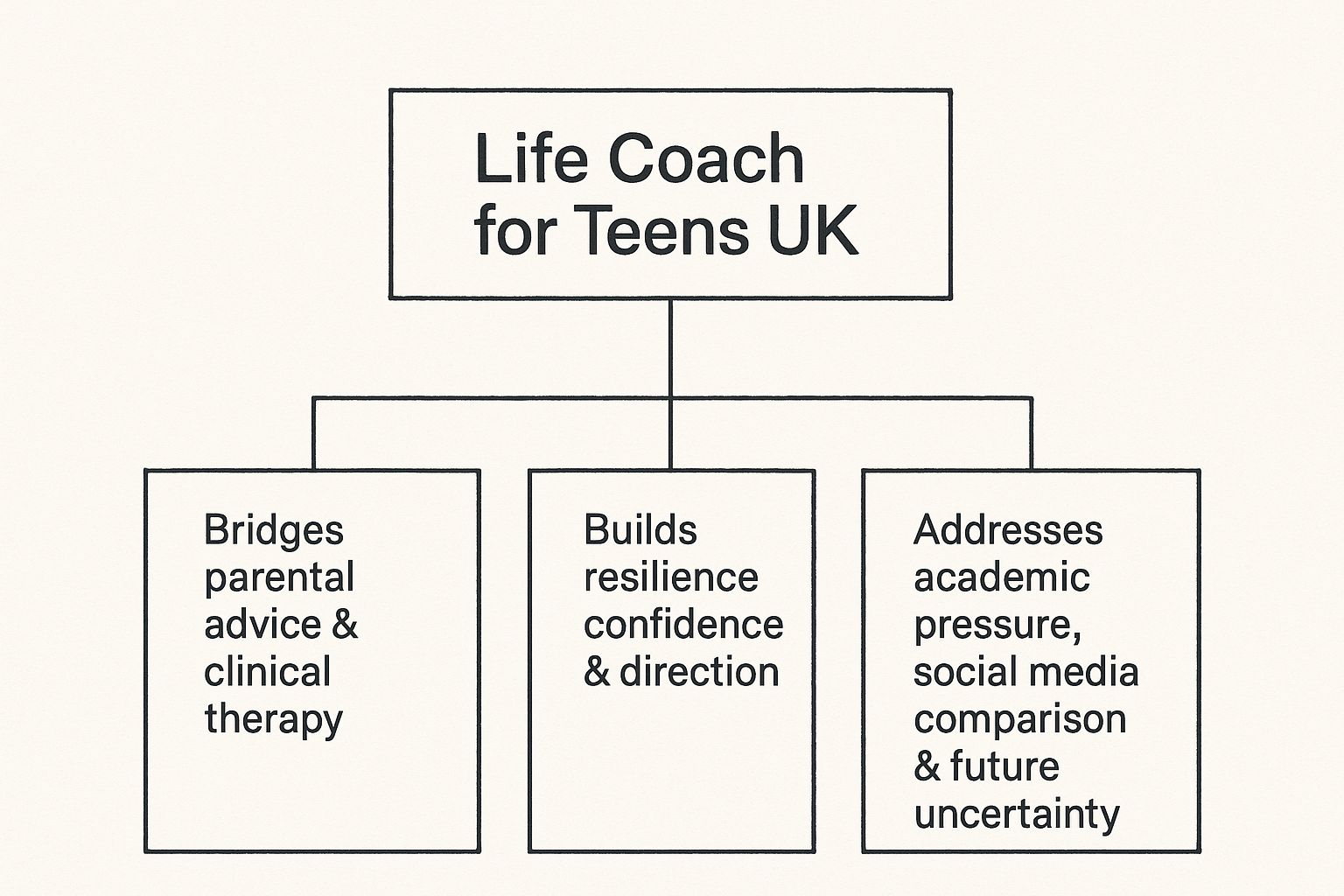
As you can see, coaching acts as a central pillar, helping teens tackle modern challenges while building foundational life skills.
It’s easy to get coaching, therapy, and parenting confused, as they can sometimes overlap. However, each plays a very distinct role in a teen’s development. This table breaks down the key differences to help clarify where a life coach fits in.
Coaching vs Therapy vs Parental Guidance
| Area of Focus | Life Coach | Therapist | Parent |
|---|---|---|---|
| Primary Goal | Future-focused growth, goal achievement, skill-building. | Past-focused healing, diagnosing and treating mental health conditions. | Nurturing, guiding, and providing a safe and loving environment. |
| Methodology | Asking powerful questions, setting actionable steps, accountability. | Exploring emotions, trauma, and behavioural patterns. Clinical interventions. | Offering advice, setting boundaries, providing emotional and practical support. |
| Timeline | Present to future. Focuses on what’s next. | Past to present. Explores roots of current issues. | Lifelong. Adapts to child’s developmental stages. |
| Relationship | A partnership or alliance. The coach is a guide. | A clinical relationship. The therapist is the expert. | An emotional and familial bond. The parent is the caregiver. |
Ultimately, these roles aren’t mutually exclusive—they can and often do work together to create a powerful support system for a teenager. A coach provides the forward-looking, action-oriented piece of that puzzle.
Addressing Modern UK Teen Challenges
Let’s be honest, today’s teenagers in the UK are dealing with pressures that previous generations never imagined. A good life coach understands this landscape and is equipped to help them navigate it.
- Academic Pressure: From GCSEs and A-levels to university applications, the pressure is immense. A coach can help a teen develop solid time management skills, find study habits that actually work for them, and learn to manage exam anxiety. It’s about turning that feeling of overwhelm into a clear, manageable plan.
- Social Media Comparison: The constant stream of curated perfection on Instagram and TikTok can be brutal for self-esteem. Coaching provides a space to build genuine self-confidence, develop a healthier self-image, and foster the resilience needed to push back against online comparison culture.
- Future Uncertainty: The job market is changing faster than ever, leaving many teens feeling anxious about what comes next. A coach can help them explore their passions, identify their unique strengths, and start setting clear, actionable goals for their career and life.
A life coach doesn’t give teens the answers. Instead, they empower them with the right questions and strategies to find their own answers. This fosters an independence and self-reliance that lasts a lifetime. The shift from being a passive recipient of advice to an active participant in their own growth is the real magic of coaching.
How Coaching Tackles Teen Motivation and School Pressure
The pressure cooker of GCSEs, A-levels, and university applications is intense. For UK teens, this isn’t just about juggling revision timetables; it’s about managing the emotional fallout of that pressure. The fear of not measuring up can be paralysing, often leading straight to procrastination and a nosedive in motivation.
This is where a life coach for teens in the UK comes in. Think of them less as a tutor and more as a strategist and a personal motivator.
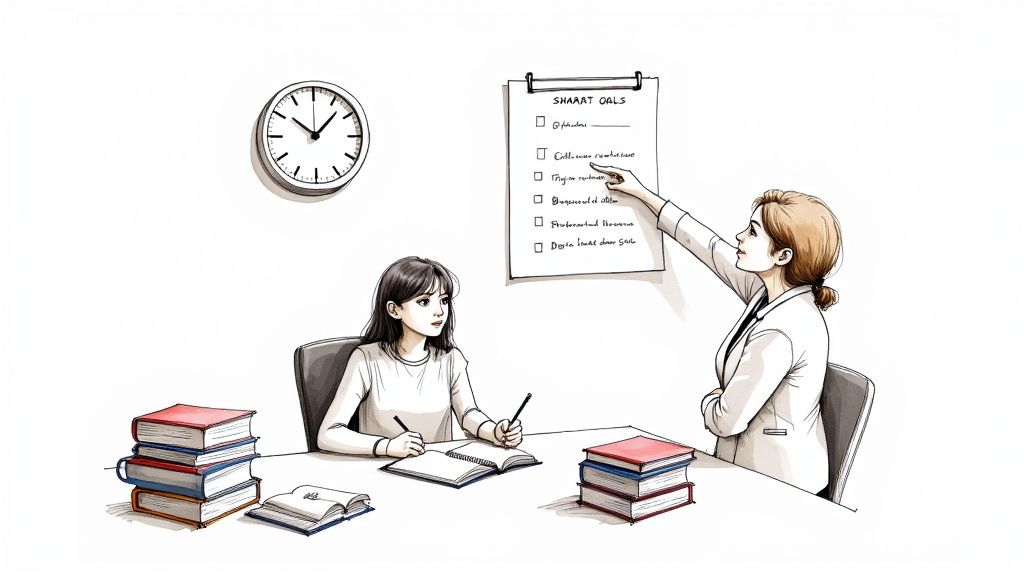
A good coach helps a teen figure out the why behind the struggle. Is it simply a case of poor organisation, or is there a deeper fear of failure lurking beneath the surface? Getting to the root cause is everything. Only then can we build practical, personalised strategies that turn that feeling of being overwhelmed into a sense of control.
This is the real difference between tutoring and coaching. A tutor helps with a specific subject. An academic coach, on the other hand, works on the mindset and skills needed to succeed across the board. You can get a better sense of this in our detailed guide to academic coaching.
From Procrastination to Proactive Planning
Let’s be honest: procrastination is almost never about laziness. It’s a coping mechanism. When a task feels too big—like revising for ten exams at once—it’s easier to just… not start. A coach’s job is to help a teen break that cycle with simple, manageable frameworks.
One of the most powerful tools for this is setting SMART goals:
- Specific: “I need to revise” becomes “I will revise Chapter 4 of my Biology textbook for 45 minutes.”
- Measurable: It’s easy to know if you did it. Did I finish the 45-minute session? Yes or no.
- Achievable: The goal is realistic. It doesn’t trigger that same sense of dread that invites procrastination.
- Relevant: This one small action directly helps with the bigger goal: passing the Biology exam.
- Time-bound: A deadline like “by 7 PM tonight” adds a clear structure and a sense of urgency.
This simple shift turns a vague, stress-inducing idea into a concrete action item. It builds momentum. It builds confidence. It proves to a teenager that they can get a handle on their workload.
A life coach acts as an architect for a teen’s academic life, helping them build a solid foundation of study habits, time management skills, and a resilient mindset. The goal isn’t just to pass an exam, but to construct a sustainable system for lifelong learning and achievement.
Building Mental Resilience for Academic Challenges
The emotional weight of school pressure is just as real as the workload. It’s huge. Organisations like YoungMinds constantly highlight the rise in mental health struggles among young people, and academic stress is a massive part of that picture. A life coach offers a safe, non-judgmental space for teens to talk about these anxieties.
They also provide practical tools to build mental and emotional strength. This might be as simple as a guided meditation exercise to quiet a racing mind before an exam. For instance, a coach might walk a teen through a five-minute breathing exercise to help them feel grounded and dial down the volume on all those “what if” thoughts.
For teenage boys, in particular, societal pressure can make it incredibly difficult to admit they’re feeling overwhelmed. Great organisations like CALM (Campaign Against Living Miserably) provide crucial support, and a coach can be a bridge to that kind of help. We create a space where it’s okay for young men to talk about their struggles, helping them see that asking for support is a sign of strength, not weakness. This foundation is key to helping them develop the emotional intelligence they need to thrive, both in school and in life.
Parenting Tips for Supporting Your Teen’s Journey
When your teen starts working with a life coach, your role doesn’t shrink—it shifts. You move from being the main problem-solver to becoming their most important ally, a supportive partner in their growth. The goal is to create a home environment that reinforces the new skills and mindsets they’re building in their coaching sessions.
This partnership has never been more vital. According to NHS research, rates of probable mental disorders among 17 to 19-year-olds in England rose from 17.7% in 2021 to 25.7% in 2022. You’re not just helping them through a tough patch; you’re building a foundation for their future resilience.

Communication and Creating a Safe Space
Great communication is the bedrock of it all. But it might look a little different now. Instead of jumping in with advice or a lecture (we’ve all been there), try borrowing a few coaching techniques yourself.
Ask open-ended questions. Things like, “How did that feel for you?” or “What do you think you could do differently next time?” This simple switch invites them to reflect instead of getting defensive.
Active listening is your superpower here. It means putting your phone down, making eye contact, and genuinely hearing what they’re saying—and just as importantly, what they’re not. A simple phrase like, “That sounds really tough,” can validate their feelings and create a safe space where they feel seen and heard, not judged.
Beyond conversations, you can also support them by championing healthy routines. Consistent sleep, good nutrition, and regular movement have a massive impact on mental wellbeing. There are plenty of simple and effective strategies for improving mental wellbeing through lifestyle changes that you can explore and implement as a family.
Tackling Motivation, School, and Procrastination
Let’s be honest: nagging about schoolwork rarely works. A more effective approach is to collaborate with them. Sit down together and help break overwhelming assignments into small, manageable steps. Getting started is often the hardest part of beating procrastination, and this makes that first step feel much less daunting.
Remember to celebrate the small wins, too. Acknowledge the effort they put into studying, regardless of the final grade. This teaches them to value the process, not just the outcome, which is a game-changer for building resilience. For more on this, check out our guide on using coaching tools to enhance your teen’s school engagement.
Managing your own anxiety is one of the most impactful things you can do. Teens are highly attuned to parental stress. By modelling calmness and trust in their ability to navigate challenges, you give them the confidence to believe in themselves.
Resources for Teen Boys and Young Men
Teenage boys often feel a unique pressure to keep their emotions bottled up, which can lead to them struggling in silence. One of the best things you can do is normalise conversations about feelings and mental health at home. Create an environment where vulnerability is seen as a strength, not a weakness.
It also helps to connect them with positive resources designed for them.
- Men’s Groups: Organisations like Journeyman UK provide powerful mentorship and a strong sense of community for boys on their journey into manhood.
- Mental Health Support: Charities such as CALM (Campaign Against Living Miserably) offer a safe space and resources specifically for young men who are going through tough times.
- A Simple Meditation Guide: Mindfulness can be a game-changer for stress. You can introduce a simple 5-minute breathing exercise: just sit comfortably, close your eyes, and focus only on the feeling of breathing in and out. It’s a powerful tool for calming an anxious mind.
By encouraging open dialogue and pointing them toward these kinds of resources, you’re empowering your son to build the emotional intelligence and resilience he’ll carry for the rest of his life.
Recognizing When Your Teen Needs More Than Coaching
A life coach for teens in the UK can be a fantastic partner for growth, motivation, and figuring out the future. But it’s really important to know where coaching ends and clinical mental health support begins.
Think of it this way: a coach is like a personal trainer for life skills, while a therapist is like a doctor who can diagnose and treat underlying health issues. They have different, but equally vital, roles.
It’s no secret that life coaching has exploded in popularity, which says a lot about how much people are focusing on personal development. The industry was valued at around $4.56 billion globally in 2022 and is projected to hit $7.3 billion soon—that’s a 60% jump since 2019. The UK is right there with this trend, especially for young people, showing that more parents are looking for proactive ways to support their teens. You can dig deeper into these global coaching statistics to see how the industry is expanding.
Coaching is all about looking forward and taking action. Therapy, on the other hand, is essential for healing past trauma, working through persistent low moods, or addressing clinical conditions like anxiety and depression. A great coach knows their limits and will always, without hesitation, recommend professional mental health support when they see it’s needed.
When to Seek Professional Mental Health Support
Knowing the signs that your teen might need more than a coach is the first step to getting them the right kind of help. A bit of moodiness is just part of being a teenager, but some behaviours, when they stick around, definitely warrant a chat with your GP or a qualified therapist.
Keep an eye out for these signals:
- Prolonged Sadness or Irritability: If they seem withdrawn, hopeless, or unusually angry for more than a couple of weeks.
- Significant Changes in Habits: Big shifts in their sleeping or eating patterns, whether it’s much more or much less than usual.
- Loss of Interest: They’ve stopped enjoying hobbies or activities that used to make them happy.
- Social Withdrawal: They’re actively avoiding friends, family, and social events they once looked forward to.
- Decline in School Performance: A sudden, unexplained drop in their grades or a total lack of interest in school.
- Talk of Self-Harm: Any mention of hurting themselves or feeling like life isn’t worth living needs immediate professional help.
If you’re noticing these things, it’s not an overreaction to seek help. Trust your gut. Starting with your GP is often the best move, as they can refer you to specialist services like CAMHS (Child and Adolescent Mental Health Services) or point you toward local therapists.
Reputable UK Mental Health Resources for Young People
Trying to figure out the UK’s youth mental health system can feel overwhelming, but there are some absolutely fantastic organizations out there ready to help. These resources can be a lifeline for both teens and parents, offering everything from immediate crisis support to practical information and guidance.
Here are a few highly respected UK-based organisations:
- YoungMinds: A leading charity dedicated to the mental health of children and young people. Their website is packed with information for parents, and they have a crisis messenger service for teens who need support right away.
- The Mix: They provide essential support for anyone under 25 on all sorts of issues—mental health, money, relationships, you name it. They have a free, confidential helpline, webchat, and even counselling services.
- Kooth: An online mental wellbeing community offering free, safe, and anonymous support. Teens can read articles, join moderated forums, and chat one-on-one with qualified counsellors.
- CALM (Campaign Against Living Miserably): While their services are for everyone, CALM has a strong focus on supporting young men. They offer a helpline and webchat for anyone who’s struggling with life’s challenges.
These services can work beautifully alongside coaching to create a really solid support network. A therapist can help a teen work through deep-seated issues, while a coach empowers them to take those insights and build a positive, goal-driven future.
What About Teen Boys? Specific Support and Resources
Let’s be honest: teenage boys in the UK are up against a unique set of pressures. Society often hands them a script that says they need to be strong, stoic, and have it all figured out. This can make it incredibly difficult for them to talk about what’s really going on inside.
So what happens? Feelings of anxiety, stress, or sadness get bottled up. This pressure cooker of emotion can show up as anything from procrastination and disengagement to irritability and anger, leaving parents wondering what happened to their son and how on earth to help.
A life coach for teens in the UK can offer a space where that mask can finally come off. It’s a confidential, judgment-free zone where a boy can learn to name his emotions and express them without feeling weak or exposed. This is ground zero for building emotional intelligence—the skill of understanding your own feelings and connecting with what others are going through.
Nurturing a Healthier Idea of Masculinity
A huge part of my work with teen boys is helping them redefine what strength and masculinity actually mean to them. It’s about moving past the outdated, rigid stereotypes and showing them that real strength lies in self-awareness, honest communication, and having the courage to ask for help. A coach can be that positive, non-parental role model who helps guide these crucial conversations.
As a parent, you can be a powerful ally in this. You can create a home where vulnerability isn’t just accepted; it’s welcomed.
- Model It Yourself: Talk openly about your own challenges and feelings. When you share in a healthy way, you show your son that it’s completely normal for men to experience a full range of emotions.
- Listen More, Fix Less: When he finally does open up, fight the urge to jump in with solutions. Sometimes, the most powerful thing you can do is just listen and validate his feelings with something simple like, “That sounds really tough.”
- Encourage Healthy Outlets: Get behind his involvement in activities that build genuine confidence and a sense of belonging—whether that’s a sports team, a creative hobby, or a local youth group.
UK Resources for Young Men
Connecting boys with the right resources is vital. Beyond one-on-one coaching, there are some fantastic UK-based organizations offering specialized support for young men.
It takes immense strength, not weakness, for a young man to admit he’s struggling and reach out. Coaching and other resources are just tools to build resilience, turning today’s challenges into tomorrow’s growth.
Here are a couple of great places to start:
- CALM (Campaign Against Living Miserably): A leading charity offering a free, confidential helpline and webchat for anyone who needs to talk. It’s a space where young men can discuss anything without judgment.
- Journeyman UK: This organization mentors boys aged 13-17, helping them navigate the path to manhood with positive male role models and a strong sense of community.
By combining the personalised guidance of a life coach with these powerful community resources, you build a much stronger support system. This approach gives your son the emotional skills and resilience he needs to not just get by, but to truly thrive.
A Simple Mindfulness Guide for Stressed Teens
In a world full of exam pressure, endless social media notifications, and that constant feeling of being ‘on’, your brain can feel like a web browser with way too many tabs open. Mindfulness is just the practice of closing those extra tabs—even for a few minutes—to find a bit of calm and focus.
It’s not about emptying your mind completely. That’s pretty much impossible. Think of it more like a mental reset button. It’s a tool you can pull out anytime, anywhere, to dial down the stress and actually tune into the present moment. I’ve seen just how effective this is for managing the anxiety that shows up around school, motivation struggles, and procrastination.
Your First 5-Minute Meditation
Ready to give it a shot? You don’t need any special gear or a silent mountaintop. Just find a comfortable spot to sit and walk through these simple steps. This is a foundational exercise I often use with teens to help them build focus and a sense of calm from the inside out.
- Get Comfortable: Sit upright in a chair with your feet flat on the floor, or sit cross-legged on the ground. Let your hands rest gently on your lap.
- Close Your Eyes: If you’re comfortable with it, gently close your eyes. If not, just soften your gaze and look down towards the floor in front of you.
- Focus on Your Breath: Start with a few deep, slow breaths. Breathe in through your nose, and let it all out through your mouth.
- Just Notice: Now, let your breathing return to its natural rhythm. Your only job is to notice the sensation of the breath as it enters and leaves your body. Feel your chest or belly rise and fall.
- Gently Return: Your mind will wander. That’s just what minds do. When you notice your thoughts have drifted to homework, a friendship, or what’s for dinner, just gently guide your focus back to your breath. Don’t judge yourself for it; just return.
- Finish Gently: After a few minutes, slowly bring your awareness back to the room. Wiggle your fingers and toes, and when you’re ready, slowly open your eyes.
The goal isn’t to stop thoughts from happening. The goal is to notice when they happen and gently bring your attention back to your breath. Each time you do this, you’re strengthening your focus muscle.
Even a few minutes of practice can feel like a quick mental reset, and I’ve put together a few more simple exercises you can use when you’re short on time.
5-Minute Mindfulness Exercises for a Quick Reset
| Exercise Name | How to Do It | Best For |
|---|---|---|
| Mindful Listening | Close your eyes and identify 3 different sounds around you. Focus on each one without judgment. | Quieting racing thoughts, especially in a noisy environment. |
| 5 Senses Check-In | Notice 5 things you can see, 4 you can feel, 3 you can hear, 2 you can smell, and 1 you can taste. | Grounding yourself when feeling overwhelmed or anxious. |
| Body Scan | Starting with your toes, bring your attention to each part of your body, noticing any sensations without trying to change them. | Releasing physical tension before bed or after a long day. |
| Mindful Walking | Walk slowly and pay full attention to the feeling of your feet on the ground with each step. | Clearing your head and getting a bit of movement. |
These quick exercises are practical tools you can use discreetly—whether you’re at your desk, on the bus, or just need a moment to yourself.
Resources for Going Further
Practicing this simple meditation regularly can make a huge difference. For a deeper dive, our guide on meditation for teens provides more techniques and insights into how this practice can support your mental wellbeing.
Many teens I work with find that apps make it easier to build this habit. Here are a couple of popular, teen-friendly options:
- Headspace: Known for its fun, animated guides and themed sessions for things like sleep, focus, and stress.
- Calm: Offers guided meditations, soothing soundscapes, and ‘Sleep Stories’ that are great for unwinding before bed.
Making time for mindfulness is a powerful way for any teen to manage their inner world, especially for struggling boys who might find it hard to talk about stress. It’s a practical skill a life coach for teens in UK can help build, giving them a solid foundation for resilience.
Got Questions About Teen Life Coaching? You’re Not Alone.
It’s completely normal to have questions when you’re looking for the right support for your teenager. You want to know you’re making the best possible choice for them. I get it.
Let’s cut through the noise and get straight to what you really want to know about finding and working with a life coach for teens in the UK.
What Actually Happens in a Coaching Session?
Think of it less like a lecture and more like a focused, one-on-one conversation that’s all about your teen. It’s not therapy, and it’s definitely not a telling-off. It’s a space to collaborate and look forward.
A typical session usually flows like this:
- We check in first. We’ll talk about what’s happened since our last chat, celebrate the small wins (they’re a big deal!), and work through any roadblocks they’ve hit.
- Then we dive into a specific topic. This could be anything from finally tackling that revision timetable to figuring out how to handle exam stress or building the confidence to speak up in social situations.
- We finish with a clear plan. The goal is to break a big, overwhelming goal into small, concrete steps your teen can actually take before we meet again.
They should leave every session feeling clearer, more motivated, and knowing exactly what to do next.
How Do You Know If It’s Actually Working?
Progress isn’t just about better grades, though that’s often a happy side effect. What we’re really looking for are shifts in their mindset, their actions, and how they see themselves.
Real progress is when a teen starts managing their own world without needing a nudge. It’s the moment they make a revision plan on their own, handle a tricky friendship with new skills, or start genuinely getting excited about what’s next for them.
Some of the key signs we’re on the right track include:
- A real shift in motivation: You’ll see them more engaged with school, hobbies, and life in general.
- Less putting things off: They start taking the initiative instead of avoiding tasks they find difficult.
- They communicate better: They start opening up more at home and expressing themselves more clearly with their friends.
- They bounce back faster: Setbacks don’t derail them like they used to. They’re building resilience.
What’s the Deal with Confidentiality?
Trust is everything. For coaching to work, a teen needs to feel like they have a safe space to be honest about what’s on their mind, without any fear of judgment. That means everything they share with me stays confidential.
But as a parent, you’re a key part of the team. While the nitty-gritty of our chats remains private, I’ll share general themes and progress updates with you in a way we all agree on beforehand. The only exception, and it’s a non-negotiable one, is if I have any concern for your teen’s safety or the safety of someone else. In that case, I follow strict safeguarding protocols immediately.
Are There Specific Resources for Teen Boys?
Teenage boys often feel a unique kind of pressure and can find it really tough to talk about what they’re going through. Coaching gives them a dedicated space to build emotional intelligence without feeling judged.
Beyond coaching, connecting them with positive communities is a game-changer. Organisations like CALM (Campaign Against Living Miserably) offer fantastic support for young men in the UK, creating places where it’s okay not to be okay.
A huge tip for parents is to model this openness at home—show them that talking about feelings is a sign of strength, not weakness. Even something as simple as a guided meditation on breathwork can be a powerful, private tool for them to manage stress on their own terms.
Ready to see how a dedicated coach can help your teen build the confidence, skills, and drive to really thrive? At Andrew Petrillo Life Coaching, I offer a practical, no-fluff approach designed to help young people tackle their challenges and unlock what they’re truly capable of.
Book a complimentary 20-minute discovery call to learn more.