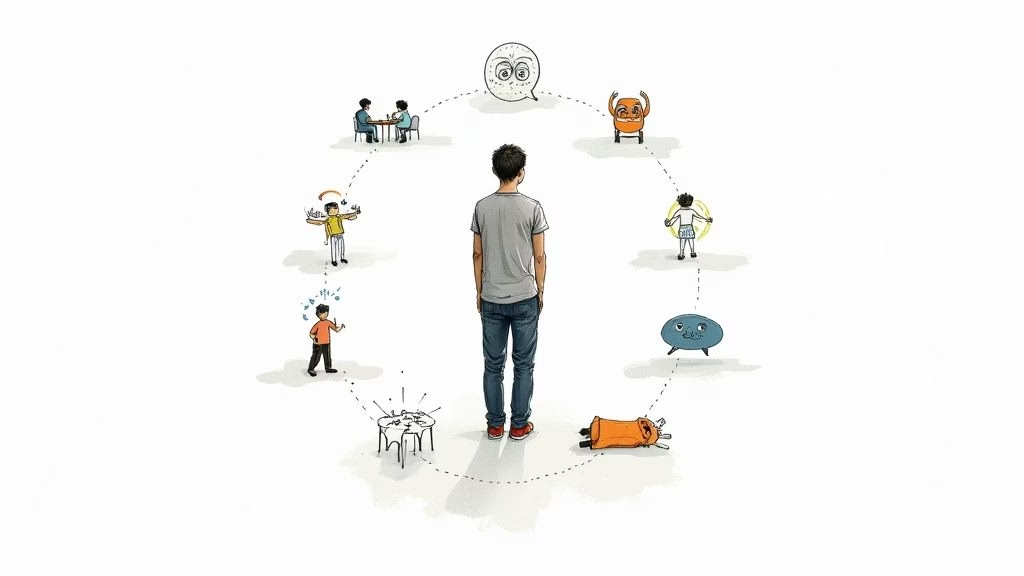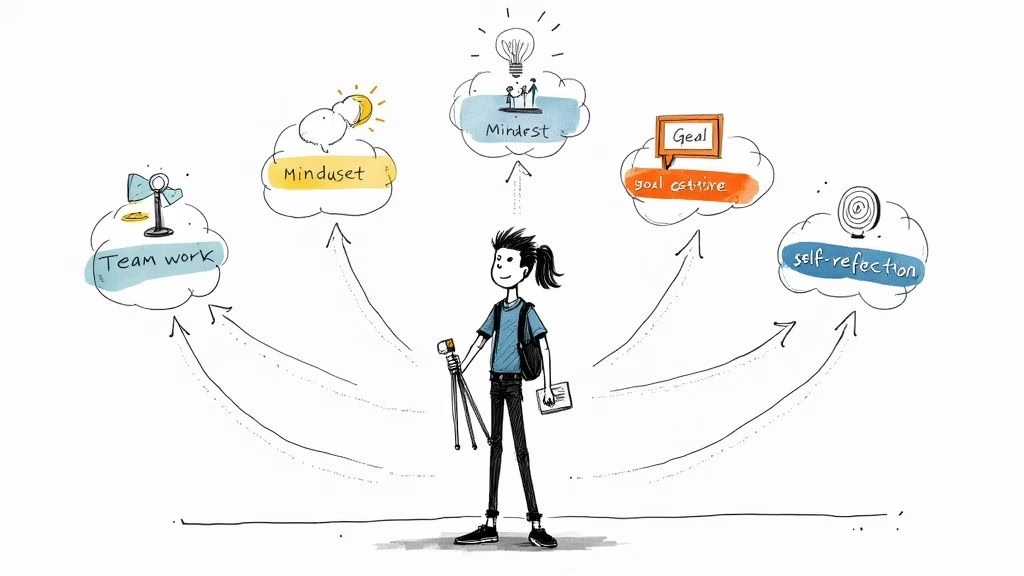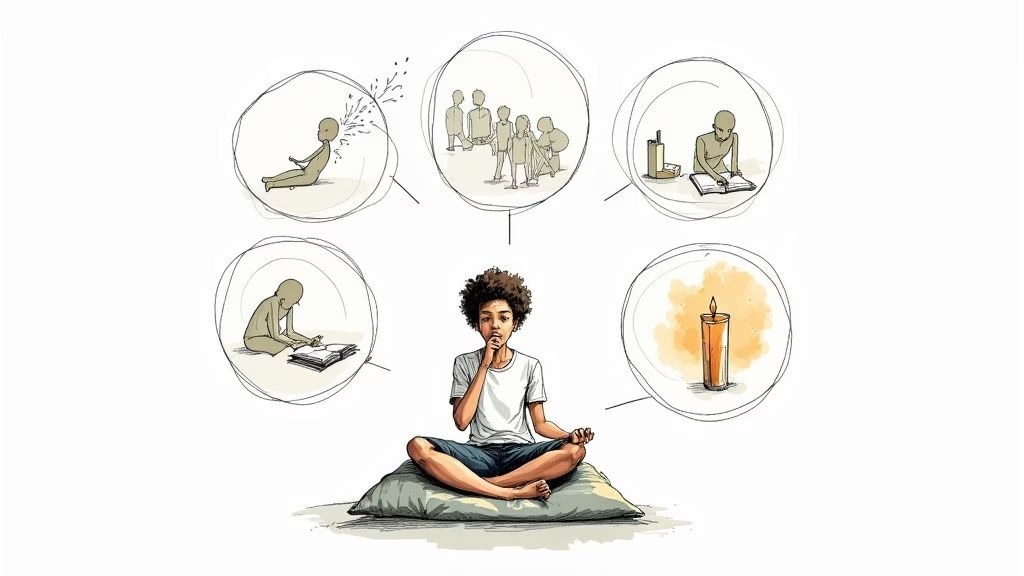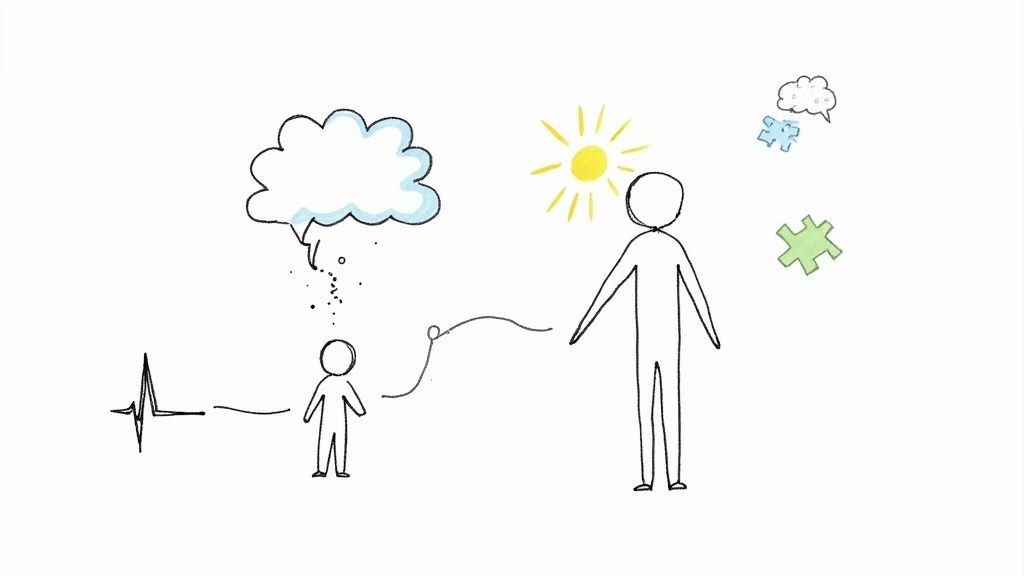
Emotional intelligence coaching isn't about "fixing" a problem. It's about partnering with a teen to give them the essential skills they need to understand their own emotions, handle social situations with confidence, and build real resilience. Think of it as a practical toolkit for navigating life’s challenges, from the pressure of exams to the ups and downs of friendships. This approach helps young people build a solid foundation for whatever comes next.
Why Emotional Intelligence Coaching Matters for Teens

Imagine trying to navigate the often-turbulent waters of high school, social pressures, and future planning without a map or compass. It’s overwhelming. Emotional intelligence (EQ) is that internal compass. It helps teens find their direction when they feel lost, stay steady during storms, and make choices that align with their true north. Emotional intelligence coaching is simply the process of helping them build that compass and learn how to use it.
This kind of coaching zeroes in on core life skills that make a real difference in a teen's day-to-day world. It’s not therapy, which often digs into past trauma or mental health conditions. Instead, it’s a forward-looking process focused on building strengths and turning abstract ideas into practical, real-world abilities.
The Five Pillars of a Teen's Life Compass
An emotional intelligence coach helps teens get a handle on five key areas—each one a critical piece of their internal guidance system.
- Self-Awareness: This is about recognizing their own feelings and why they’re happening. A teen with strong self-awareness can feel that knot of anxiety in their stomach before a test and know it’s just a normal response to pressure, not a sign they're going to fail.
- Self-Regulation: This means managing emotions in a healthy way. Instead of blowing up after a disagreement, a teen learns to take a breath, process their frustration, and respond calmly instead of just reacting. This is crucial for their mental health, as research from institutions like the Yale Center for Emotional Intelligence shows that teens with higher EQ report less anxiety and depression.
- Motivation: It’s about finding the inner drive to stick with goals, especially when school gets boring or tough. This is what helps a student connect a difficult history project to their long-term dream of getting into a certain college, turning procrastination into actual progress.
- Empathy: This is the key to stronger friendships and better family relationships. It’s the ability to understand and share what others are feeling, allowing a teen to see a fight from their sibling's perspective for a change.
- Social Skills: This covers everything from communicating clearly and listening well to resolving conflicts without drama and working with others on group projects. It’s about handling relationships effectively.
More Than Just Feelings—It's a Foundation for Success
The demand for these skills is exploding, and the numbers show it. The global coaching market, already valued at $6.25 billion, is on track to hit $7.3 billion, with client satisfaction rates reaching an incredible 98%. This isn't just a trend; it's a worldwide recognition that skills like emotional intelligence are non-negotiable for a successful life. You can learn more about the coaching industry's impact on personal development.
At the end of the day, emotional intelligence coaching gives teens a foundation of resilience. It empowers them to manage academic stress, push past procrastination, and build friendships that actually mean something. It’s about helping them become confident, capable young adults who are ready not just for the next exam, but for all the challenges and opportunities waiting for them in college and beyond.
The Five Pillars of Emotional Intelligence in Action
Emotional intelligence isn't some abstract idea you read about in a textbook. It’s a real, hands-on set of skills you can learn, practice, and use every single day. For teens juggling school, friendships, and figuring out who they are, these skills are everything. Emotional intelligence coaching is what bridges the gap between knowing the theory and actually using it to build confidence and resilience.
This is how the different pieces of emotional intelligence fit together.
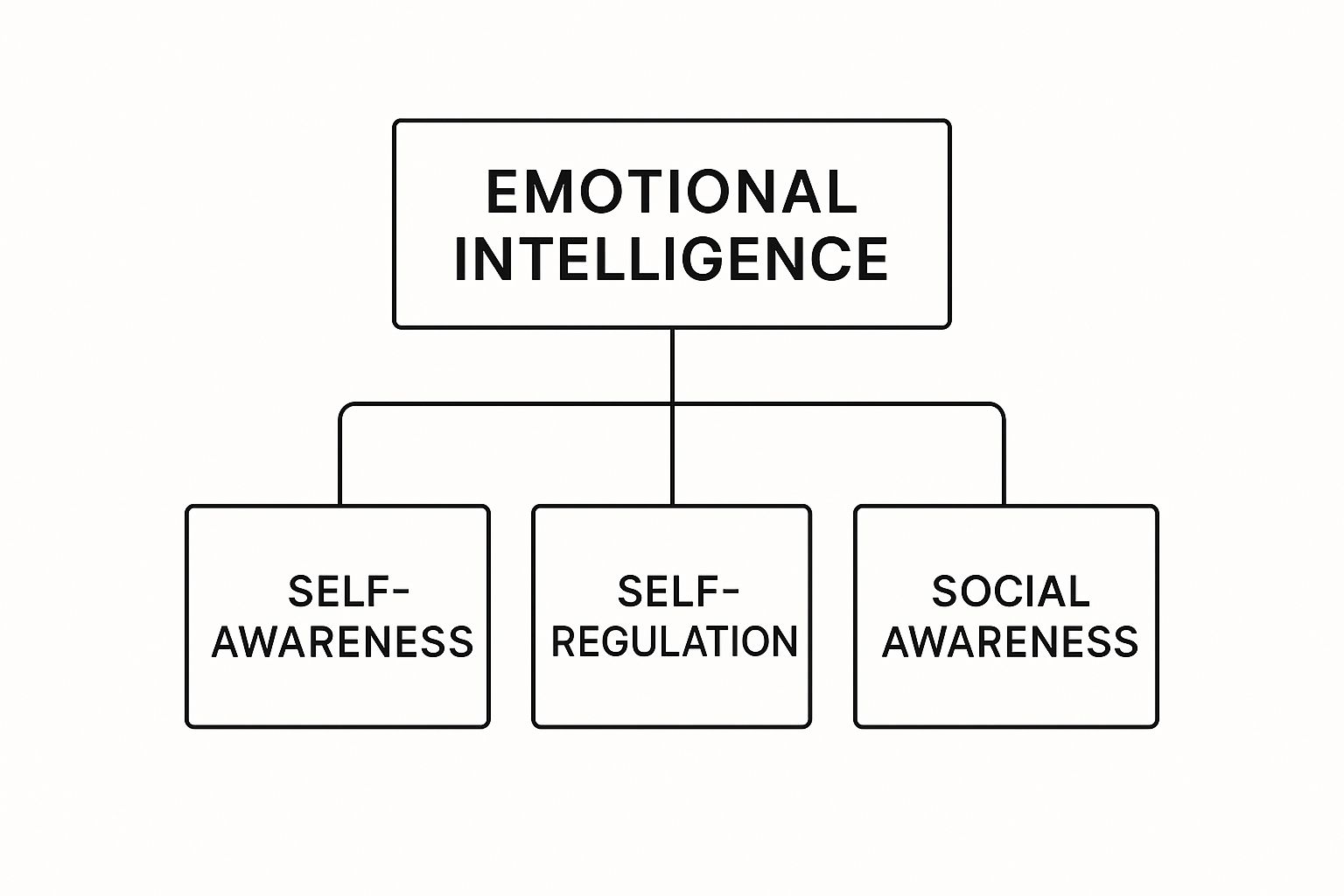
As you can see, it all starts with understanding yourself (Self-Awareness) and managing your actions (Self-Regulation). Once you’ve got a handle on your own world, you can successfully connect with others (Social Awareness).
Self-Awareness: Recognizing Your Inner World
Self-awareness is simply the ability to notice your own emotions as they're happening. It’s about tuning into your body’s signals—that knot in your stomach before a presentation, or the flush of heat in your cheeks when you feel embarrassed. A teen with strong self-awareness can feel the physical signs of anxiety before a big test and know it’s just a stress response, not a sign they’re about to fail.
“Emotions are not an inconvenience, but rather a piece of human evolution that serves a purpose. We have to understand and accept before we can control and express our emotions.”
This is the foundational skill. It's the first step to getting a grip on difficult feelings. You can't manage what you don't even recognize. By learning to put a name to what they're feeling, teens start to feel in control of their emotions, instead of the other way around.
Self-Regulation: Managing Your Reactions
Okay, so you’ve noticed an emotion. What happens next? That’s where self-regulation comes in. It’s the skill of handling your emotional reactions in a healthy, productive way.
Instead of firing off an angry text after a fight with a friend, a teen with good self-regulation can hit pause. They can take a breath, process their frustration, and choose a better way to respond. This skill is a game-changer for dealing with life’s inevitable setbacks, allowing them to feel disappointment over a bad grade without spiraling into self-blame. They learn that all feelings are valid, but not all actions are helpful.
Motivation: Fueling Your Drive From Within
Motivation is that internal fire that pushes us toward our goals, especially when things get boring or tough. For a lot of teens, schoolwork can feel totally disconnected from what they actually care about, which leads to procrastination. This isn't usually about being lazy; it's often an emotional reaction to feeling overwhelmed or scared to fail.
Emotional intelligence coaching helps teens find intrinsic motivation by connecting the dots between their homework and their real passions or long-term dreams. For instance, a student who loves video games can find a reason to care about math once they see how it connects to coding and 3D modeling. Suddenly, a boring chore becomes a meaningful step toward their future.
Empathy: Understanding Others' Perspectives
Empathy is the ability to not just understand but also share the feelings of another person. It's what allows a teen to see an argument from their sister's point of view or offer real comfort to a friend who's hurting. Building empathy is one of the most important parts of creating strong, lasting relationships.
Want to help foster empathy at home? Try these tips:
- Talk About Characters: When you're watching a movie or show, ask questions like, "Why do you think they did that?" or "How do you think that character is feeling right now?"
- Practice Active Listening: Encourage your teen to just listen without interrupting or already planning what they're going to say next. Make sure you model this yourself.
- Validate Their Feelings: Even if you don't get why they're so upset, acknowledging their emotion helps them feel seen. Saying, "I can tell you're really frustrated right now," makes a huge difference.
Social Skills: Navigating the Social World
Social skills are where the other four pillars all come together. They’re about using your self-awareness, self-regulation, motivation, and empathy to communicate well and build positive relationships.
This is what it looks like in real life: navigating a group project with clashing personalities, resolving a fight with a friend peacefully, or speaking up in class with confidence. Strong social skills are a direct result of being able to manage yourself and understand others—paving the way for success in school, work, and life.
To bring it all together, here’s a look at how these pillars can be applied to real challenges teens face every day.
Applying the 5 Pillars of Emotional Intelligence
| EQ Pillar | Common Teen Challenge | How Emotional Intelligence Helps |
|---|---|---|
| Self-Awareness | Feeling overwhelmed by anxiety before a big exam. | Recognizing the physical signs of anxiety (racing heart, tense muscles) and labeling the feeling as "stress" instead of "I'm going to fail." |
| Self-Regulation | Getting into a heated argument with a parent over curfew. | Instead of yelling, the teen takes a deep breath, calms down, and asks to continue the conversation when they're less angry. |
| Motivation | Procrastinating on a boring history essay. | The teen connects the essay to their goal of getting into a good college, reframing it as a necessary step toward their future. |
| Empathy | A friend is upset after not making the soccer team. | The teen listens without judgment, acknowledges their friend's disappointment, and offers support instead of just saying "it's okay." |
| Social Skills | Working on a group project with a difficult team member. | The teen uses empathy to understand their teammate's perspective and communication skills to find a compromise that keeps the project moving forward. |
As you can see, emotional intelligence isn't just about "being nice." It's a powerful toolkit that helps teens and young adults navigate the ups and downs of life with greater confidence and skill.
Boosting Motivation and Overcoming Procrastination

Let’s be honest: two of the biggest hurdles for any teen are the constant battle with procrastination and the search for motivation that actually lasts. As a parent, it’s easy to see an unstarted project and just think it’s laziness. I get it. But procrastination is almost never about being lazy—it’s an emotional gut reaction to feelings like fear of failure, anxiety about not being perfect, or just feeling completely overwhelmed by a task.
This is where emotional intelligence coaching completely shifts the conversation. Instead of just barking, "stop procrastinating," a coach helps a teen look inward. They use self-awareness as a tool to pinpoint the real emotion driving the avoidance. Is it fear? Is it confusion about where to even start? Once that feeling is named, self-regulation skills provide the practical tools to manage it and move forward.
From External Pressure to Internal Drive
Think about where most of a teen's motivation comes from, especially for school. It's usually external—grades, getting parental approval, or avoiding punishment. And while those things can work in the short term, they don't build a sustainable, internal fire. Emotional intelligence coaching helps teens find their intrinsic motivation by connecting the dots between their daily tasks and what they genuinely value.
A coach might reframe a tedious assignment by asking, "I know you don't love history, but how does getting a good grade in this class help you get into that graphic design program you're so passionate about?" All of a sudden, a boring task becomes a strategic step toward a personal dream. The motivation now comes from within, which is infinitely more powerful than any outside pressure.
Emotional intelligence isn't just about managing emotions; it's about channeling them. It allows a teen to transform the nervous energy of a deadline into focused action and the frustration of a challenge into problem-solving determination.
The ripple effect of these skills goes way beyond the classroom. The ability to self-motivate and manage emotional responses to pressure is what separates the good from the great in any field. In fact, among top performers in the workplace, 90% have high emotional intelligence, which directly accounts for 58% of their job performance. Mastering these skills as a teen builds a direct pathway to future success.
Practical Tools to Break the Procrastination Cycle
Identifying the emotion is step one, but teens need practical strategies to actually take action. An emotional intelligence coach gives them a toolkit to break down big, intimidating tasks and build real momentum.
Here are a few game-changers:
- Task-Chunking: Instead of a goal like, "write a 10-page paper," the goal becomes, "write the one-paragraph introduction." This simple trick makes huge projects feel less overwhelming and silences the anxiety that triggers procrastination in the first place.
- Positive Self-Talk: Teens learn to recognize that inner critic—the voice that says, "You're going to fail anyway, so why bother?" They learn to replace that negative loop with supportive, realistic self-talk, like, "This is hard, but I can handle the first step."
- The Five-Minute Rule: A coach might encourage a teen to just commit to working on a dreaded task for five minutes. That’s it. More often than not, just getting started is the hardest part, and this tiny commitment is enough to break through the initial inertia.
These simple but incredibly effective techniques are the bedrock of self-regulation. They give teens a sense of control and accomplishment, which in turn fuels their motivation to keep going.
For parents looking to support this journey, understanding these dynamics is key. Our guide offers more specific advice on how to motivate a teenager by fostering this kind of internal drive at home. By helping reframe challenges and celebrating the small wins, you can reinforce the powerful skills they’re building in coaching.
Practical Parenting Tips to Support EQ at Home
As a parent, you're the most important person in your teen's emotional intelligence journey. While an emotional intelligence coaching program gives them the framework and the tools, the real magic happens at home. When you weave EQ-building habits into your family's daily life, you’re not just reinforcing what they learn in coaching—you’re building a foundation of trust and open communication that will last a lifetime.
Think of it this way: a coach can teach a teen how to use a new set of tools, but home is the workshop where they actually get to build things. You don't have to be an EQ expert. You just have to be willing to create a space where emotions are seen, heard, and handled with respect. It all starts with small, consistent actions that add up to a huge difference.
Model the Behavior You Want to See
One of the most powerful things you can do is simply model healthy emotional responses. Your teen is always watching, and they absorb far more from what you do than what you say.
Picture this: a frustrating email from work lands in your inbox. Instead of snapping or slamming your laptop shut, you take a breath and say out loud, "Wow, this is really frustrating. I need to take a minute to think before I respond."
In that one simple moment, you've taught them:
- It’s okay to feel negative emotions like frustration.
- Self-awareness is naming the feeling.
- Self-regulation is pausing instead of reacting.
When you handle your own stress and setbacks constructively, you give your teen a living, breathing example of emotional intelligence in action.
Practice Active Listening and Validation
When your teen is upset, the natural instinct is to jump in and fix the problem. I get it. But more often than not, what they really need is just to feel heard and understood. This is where active listening and validation are game-changers.
Validation doesn't mean you have to agree with them. It just means you acknowledge that their feelings are real and valid for them. Research even shows that when parents consistently validate feelings before guiding problem-solving, their kids are physically healthier and do better in school.
The core of validation is simple but profound: it’s about accepting all emotions, even if you don’t accept all behaviors. It tells your teen, "Your feelings make sense, and I’m here with you."
So instead of saying, "It's not that big of a deal," try something like, "It sounds like you're really disappointed about what happened with your friend." This small shift can turn a potential argument into a moment of connection. Building these types of teen communication skills is exactly how you foster a supportive home.
Simple Activities to Build EQ Together
You can also sprinkle EQ-building moments into your everyday life. These don’t need to be formal lessons. In fact, they work best when they feel natural and fun.
- Discuss Character Motivations: When you’re watching a movie or show together, ask simple questions. "Why do you think that character did that?" or "How do you think they're feeling right now?" This gets them thinking from different perspectives and builds empathy.
- Brainstorm Family Challenges: Is there a recurring issue, like chores or weekend plans? Call a family meeting. Let everyone share their side and work together to find a solution that works for everyone. This is real-world practice in negotiation and compromise.
- Encourage Journaling: Journaling is a fantastic tool for self-awareness. It gives teens a private space to untangle their thoughts and feelings without any judgment. It’s a great way for them to start seeing patterns in their own emotions and reactions.
Finding the Right Emotional Intelligence Coach

Choosing someone to partner with on your teen's growth is a huge decision. I've seen firsthand how the right emotional intelligence coaching relationship can unlock a teen's confidence and drive. But I've also seen how the wrong fit can just lead to more frustration.
This isn't just about finding a qualified professional. It's about finding the right person who can genuinely connect with your teen and guide them through the real-world challenges of school, motivation, and mental wellness.
Your search should definitely start with the basics: credentials and experience. Look for coaches certified by reputable organizations like the International Coaching Federation (ICF). But just as important, make sure they have direct, hands-on experience with teenagers. The struggles of a 16-year-old wrestling with procrastination are a world away from those of a corporate executive.
A great coach has a clear, structured approach but knows how to adapt it to your teen’s unique personality and needs. They should be able to clearly explain how they help teens get past common hurdles, like the fear of failure that so often drives procrastination.
Key Questions To Ask A Potential Coach
A consultation call is a must before you commit. This is your chance to really get a feel for their approach and see if it lines up with your family’s goals. Don't be shy about asking direct questions about their process and how they support a teen’s mental health and motivation.
Here are a few critical questions to get the conversation started:
- Experience with Teens: Can you share some examples of how you've helped teenagers with issues like procrastination or school-related stress?
- Measuring Progress: How do we track success? What kind of changes should we expect to see, and over what kind of timeline?
- Parent Communication: What’s your policy on confidentiality? How will you keep me in the loop on my teen’s progress without breaking their trust?
- Coaching Methodology: What does a typical session actually look like? What specific tools or strategies do you use?
Their answers will tell you a lot, not just about their expertise, but about their entire philosophy on building a supportive, trusting coaching relationship.
Remember, the goal of emotional intelligence coaching is to empower your teen to build their own internal toolkit for managing life. The coach is a guide, not a director.
The Importance Of Personal Connection
Beyond qualifications and certifications, the single most important factor for success is the 'fit' between the coach and your teen. For this to work, a teenager has to feel safe, respected, and truly understood. If they don't, they won't open up and do the work.
When your teen feels a real connection, they are far more likely to engage with the process and build the skills needed for long-term resilience. For parents, understanding how to support this journey is just as crucial, and our article on building resilience in teens offers some additional insights.
Trust your gut, but more importantly, trust your teen's. Involve them in the final decision. When a teen feels like they have a say in choosing their coach, they step into the partnership with a sense of ownership and a real willingness to participate. That alone sets the stage for a positive and powerful experience.
A Parent's Guide to Teen Mental Health Resources
Supporting a teen’s journey toward greater emotional intelligence means looking at their whole world. The skills we build in emotional intelligence coaching—things like self-awareness and learning to manage big feelings—are deeply connected to their overall mental health. Think of this section as a curated list of trusted allies for you and your family.
These organizations are rock-solid. They offer everything from immediate crisis support to articles and guides that can help you keep the conversation about mental wellness going at home. They don’t replace coaching, but they do create a much wider, stronger safety net.
Where to Find Support for Your Teen
Learning to manage emotions is a huge part of navigating the pressures of high school, friendships, and figuring out who you are. The world is catching on, too. The global market for emotional intelligence was valued at around USD 8 billion and is expected to explode to nearly USD 25 billion by 2033. This isn't just a trend; it's a recognition that these skills are essential for life. You can explore more about this growing field and its incredible momentum.
Here are a few established organizations that do fantastic work:
- The Jed Foundation (JED): This nonprofit is all about protecting emotional health and preventing suicide for teens and young adults. Their website is packed with guides for parents on how to talk to your teen about mental health, spot warning signs, and find professional help when it’s time.
- The Trevor Project: As the leading organization for suicide prevention and crisis support for LGBTQ young people, The Trevor Project offers 24/7 help through phone, text, and chat. They’re an incredible resource for creating safe, inclusive spaces at home and in the community.
- National Alliance on Mental Illness (NAMI): NAMI is a grassroots organization with local chapters all over the country. They offer advocacy, education, and support groups for families affected by mental illness. Their resources for teens cover everything from understanding specific conditions to managing school stress.
- Child Mind Institute: An independent nonprofit dedicated to transforming the lives of children and families struggling with mental health and learning disorders. They offer a wealth of evidence-based information and guides specifically tailored for parents of teens.
These resources aren't a substitute for professional coaching or therapy. Instead, think of them as an invaluable part of a complete support system. They give you the knowledge you need and give your teen a place to find community and help.
Creating a Safe Harbor at Home
While these external resources are incredibly helpful, don't forget the most important space of all: your home. This is where your teen gets to practice their developing emotional skills without fear of judgment. Your role is to create an environment where talking about feelings is normal, not a big deal.
When a teen is overwhelmed by school or stuck in a cycle of procrastination, it’s almost always an emotional issue at its core.
A supportive home environment is one that validates their feelings, reinforcing the work they’re doing in coaching. It’s about being a reliable sounding board and helping them tackle challenges one at a time, whether it's a motivation slump or a friendship issue. This partnership—between coaching, home life, and outside resources—creates a powerful network for building lifelong resilience.
Frequently Asked Questions
When you're exploring emotional intelligence coaching, it's natural for questions to pop up. As a parent, you want to be sure you're making the right call for your teen’s well-being—from their school motivation to their mental health. I get it. Here are some straightforward answers to the questions I hear most often.
How Does This Coaching Help with Procrastination at School?
Here's something most people miss: procrastination isn't about being lazy. It’s almost always an emotional reaction to feeling overwhelmed, stressed, or afraid of not being good enough.
Emotional intelligence coaching goes right to the source. First, we help teens figure out what they’re actually feeling (that’s self-awareness). Then, we give them practical ways to handle that feeling instead of avoiding it (that’s self-regulation). A coach can help them slice a massive project into tiny, doable steps or teach them how to challenge the negative voice in their head. This turns that cycle of avoidance into a new pattern of action, boosting both their grades and their self-trust.
For parents, one of the most powerful things you can do is validate their feelings first. Before jumping in with a solution, try saying, "I can see this project is really stressing you out." It makes them feel seen and heard, which opens the door for them to accept your help.
What Resources Can Support My Teen's Mental Health?
Building emotional intelligence is a massive piece of the mental health puzzle, but it works best as part of a complete support system. Coaching is not a substitute for clinical care. I always recommend these incredible organizations for additional support and information:
- The Jed Foundation (JED): A fantastic resource for both parents and teens, focused on protecting emotional health and preventing suicide.
- National Alliance on Mental Illness (NAMI): Offers vital education and support groups for families, helping you understand and navigate mental health conditions.
- The Trevor Project: Provides life-saving crisis intervention and suicide prevention for LGBTQ young people.
- Child Mind Institute: Offers expert, evidence-based resources and guides on a wide range of teen mental health and learning challenges.
These resources are the perfect complement to the skills a teen learns in coaching. They provide a wealth of knowledge and a sense of community, creating a much stronger safety net.
The goal is to create a supportive ecosystem around your teen. Coaching provides the tools, these resources offer knowledge and community, and a stable home life provides the safe space to practice.
What Is the Difference Between Coaching and Therapy?
This is a really important question, and the distinction is critical. Think of it this way: therapy is a clinical practice. It’s led by a licensed mental health professional and is designed to diagnose and treat conditions like anxiety, depression, or PTSD, often by exploring past events and trauma to facilitate healing.
Emotional intelligence coaching, on the other hand, is a forward-looking, non-clinical partnership. The focus isn't on healing the past, but on building practical skills to create a better future. A coach is a guide who helps a teen build on their strengths—like resilience, focus, and motivation—to reach specific goals.
A therapist helps them heal; a coach helps them build. The two can work beautifully together, but they serve two very different, very important purposes.
At Andrew Petrillo Life Coaching, my focus is on giving teens the real-world tools they need to beat procrastination, handle stress, and build unshakable confidence. If you're ready to see your teen turn overwhelm into achievement, book a complimentary discovery call today. You can learn more about my approach at https://andrewpetrillolifecoaching.com.